
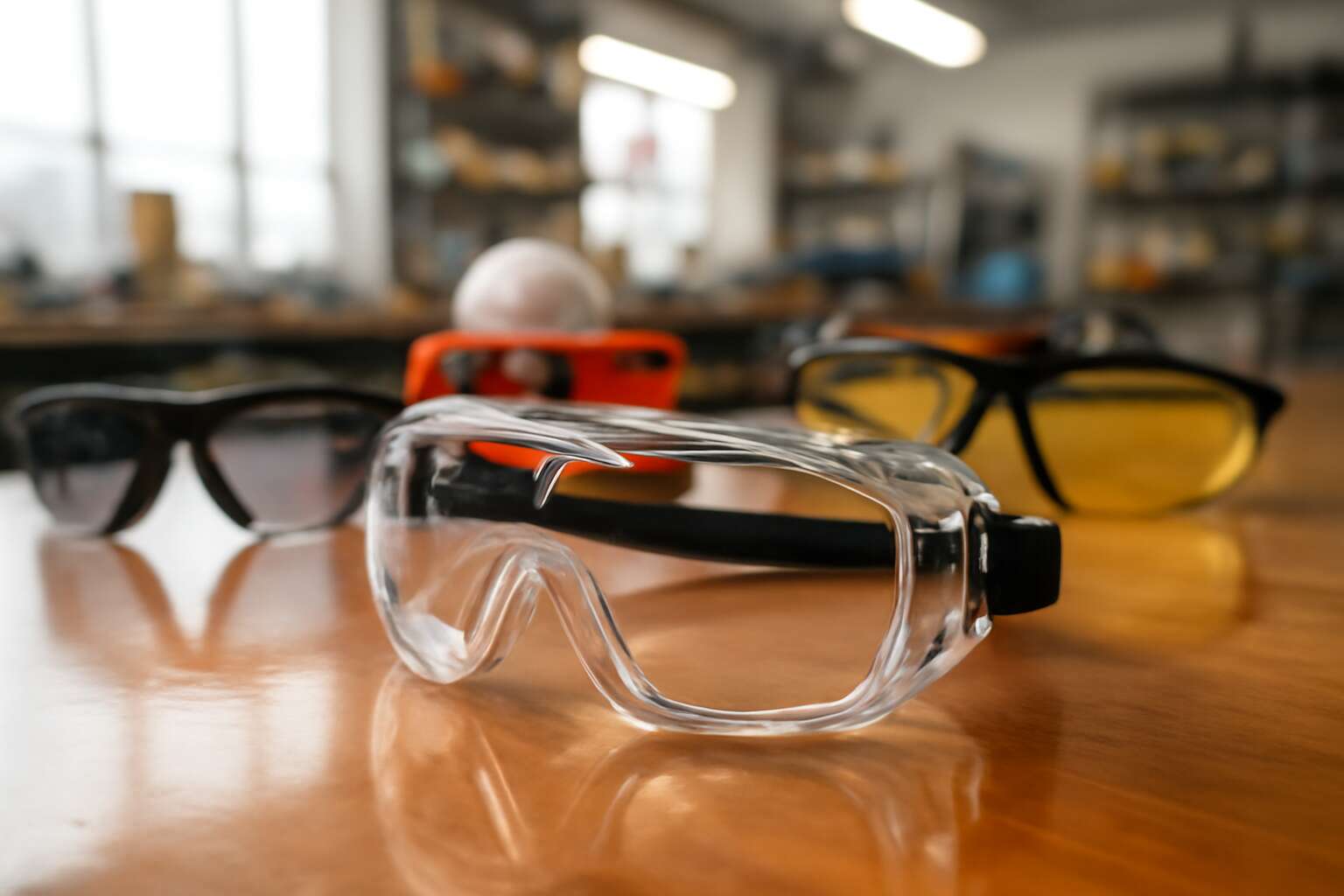
Eye protection PPE fundamentals
Categories of eye protection gear
Eye protection is more than a precaution—it’s the line between safety and lasting sight. In South Africa’s bustling workplaces, eye injuries remain a stubborn hazard, and the right ppe for eye protection can shift the odds. Comfort, fit, and resilience matter when sparks fly or dust spirals.
Fundamentals start with choosing gear that fits well, provides clear visibility, and suits the task. Categories of eye protection gear include:
- Safety glasses
- Goggles
- Face shields
- Welding helmets
- Prescription safety eyewear
- Laser safety glasses
Different environments demand different coverage, from indirect vents to wraparound seals. In SA settings, international standards help ensure performance, while care and periodic inspection keep gear reliable.
When to use different protection types
Eye injuries aren’t a punchline; they’re a costlier misstep than a spare pair of safety specs. In SA workplaces, up to 90% of eye injuries could be prevented with proper PPE for eye protection, a statistic that hits harder than a flying bolt. Comfort and visibility aren’t luxuries—they’re the gears that keep shifts focused. And yes, ppe for eye protection matters.
Fundamentally, it’s about fit and task. For dusty floors, splashes, or sparks, different protection types shine. Here’s a quick compass for the eyes:
- Dust and particles
- Liquid splashes
- Flying debris and sparks
- Bright light or arc work
Standards and upkeep in SA shops ensure you’re not staring through a foggy crisis. Regular checks, good ventilation, and a snug seal are the quiet guardians of visibility.
Standards and certifications explained
Eye protection isn’t garnish; it’s a frontline shield. In South Africa, a single eye injury can derail a shift and drain a budget—visibility is money. Standards and certifications act as guardians, steering you toward gear that holds up under heat, dust, and duty. When you choose ppe for eye protection, you’re choosing clarity that lasts and confidence that stays even when the plant roars!
Look for markings and reputable certifications—these are your road signs in the workshop. EN166, ANSI Z87.1, and local SA compliance marks signal readiness; lenses should resist fog and scratches, frames should seal, and coatings must endure routine cleaning. These standards guide your ppe for eye protection choices. A quick checklist keeps eyes on the prize:
- Markings and standards: EN166 or ANSI Z87.1, plus SA compliance marks
- Lens and coating: anti-fog, scratch-resistant, impact-rated
- Fit and seal: comfortable seal around the brow and temples
Key features to evaluate in lenses and frames
Across South Africa, a single eye injury can derail a shift and drain the budget, turning daylight into a costly echo. Eye protection is not garnish; it is a frontline shield that keeps operators lucid as heat and dust swirl along the line. In the forge of industry, the right PPE for eye protection becomes the difference between progress and downtime.
Selecting the shield starts with lenses and frames—a modern talisman that defies fog, resists scratches, and absorbs impact. I’ve seen gear endure years of cleaning while a stout frame holds a reliable seal around the brow. Your ppe for eye protection must marry clarity with resilience.
- Lens clarity with anti-fog and anti-scratch coatings
- Impact resistance rated for your hazard
- Comfortable fit and a continuous seal around brow and temples
Coatings, materials, and maintenance shape the life of the gear; choose options that tolerate routine cleaning without clouding. The right choice becomes a quiet chorus of safety and productivity as the plant roars!
Choosing comfortable, durable options
Across South Africa’s workshops, a single eye injury can derail a shift and drain the budget, turning daylight into a costly echo. PPE for eye protection is more than garnish; it’s a frontline shield that keeps operators lucid as heat and dust swirl along the line. In the forge of industry, the shield you choose can mean progress over downtime.
In choosing the best ppe for eye protection, comfort and durability lead the way. Look for lightweight frames, adjustable seals, and lenses that resist fog and scratches. A comfortable fit that maintains a continuous seal around the brow and temples means fewer distractions and steadier work, even when the plant roars!
Fundamentals to expect include:
- Lightweight, adjustable frames that seal softly around the brow
- Impact-resistant lenses with anti-fog and anti-scratch coatings
- Durable materials and easy maintenance for long shifts
Selecting protective eyewear: lenses, frames, and comfort
Lens options: clear, tinted, anti-fog, and UV protection
South Africa’s workshop floors are unforgiving—one careless scratch can sideline a shift. Selecting protective eyewear isn’t a luxury; it’s safety, productivity, and peace of mind. Focus on three pillars: lenses, frames, and comfort. When your vision stays clear, danger becomes a distant echo!
Lens options cover clear, tinted, anti-fog, and UV protection. Choosing the right ppe for eye protection begins with how you work—indoor tasks, outdoor exposure, humidity, and glare.
- Clear lenses for indoor tasks
- Tinted lenses for bright environments
- Anti-fog coatings for humid or dusty settings
- UV protection for outdoor exposure
Frames should feel like a second skin: lightweight materials, adjustable temples, and a snug seal around the eye. Comfort sustains compliance, so seek secure fit, balanced weight, and durable construction that survives long shifts and rugged environments—no drama, just dependable vision.
Frame styles and facial fit considerations
Selecting ppe for eye protection isn’t a fashion show; it’s safety you can count on through a typical South Africa workshop shift. Lenses and frames must partner so your vision stays steady and your head stays cool. Start with frame styles that fit your face and the task: wraparound for all-day protection; lightweight semi-rimless for comfort; and goggles when splashes are likely. A snug seal around the eyes, with adjustable temples and a thoughtful nose bridge, keeps slippage at bay and debris out of your field of view—no drama, just dependable vision.
- High-wrap frames for wide faces; adjust temple tips for secure grip
- Nose pads and adjustable temples to prevent slippage
- Prescription compatibility or readers for improved clarity
Facial fit matters: bridge width, temple length, and cheek clearance influence comfort and protection. Choose frames that distribute weight evenly and work with your headgear for long shifts.
Coatings and material durability
One spark, one misstep—eye protection is the shield that keeps a South Africa workshop shift from spiraling into chaos. The right ppe for eye protection blends lenses with frames into a stubborn barrier against dust, splash, and glare, especially under the blazing sun.
Lenses made of polycarbonate deliver top-tier impact resistance without weight, and durable coatings keep clarity during long days. For readers or prescription wearers, choose models that accommodate inserts so clarity stays sharp without compromising protection.
- Anti-fog coatings to beat humidity and sweat
- Scratch-resistant surfaces for lasting clarity
- UV protection to shield eyes from bright SA sun
- Hydrophobic finishes that shed moisture and grime
Durable frame materials, a comfortable nose bridge, and adjustable temples complete the package for all-day comfort on busy shifts.
Prescription compatibility and inserts
In SA workshops, eye protection is the frontline shield against dust, sparks, and glare. The choice isn’t just about tint or glare—it’s about lenses, frames, and all-day comfort. “Eye protection is not a luxury; it’s a responsibility,” as a seasoned safety manager puts it. The right ppe for eye protection is non negotiable. Prescription compatibility and inserts keep clarity sharp without sacrificing protection.
- Clip-in prescription inserts that align with your frame geometry
- Interchangeable temples and an adjustable nose bridge for secure, all-day wear
- Frame curvature that accommodates readers or prescription lenses without distortion
Durable frames, a snug nose bridge, and thoughtfully engineered optics fuse into comfort that survives the longest shifts.
Sizing tips for all day wear
In SA workshops, eye injuries still account for roughly 20% of recordable incidents, making ppe for eye protection non-negotiable and a daily companion for workers.
Selecting protective eyewear means balancing lenses, frames, and all-day comfort. Lenses should deliver sharp, distortion-free vision in dusty, glare-filled environments, while frames must sit securely with a snug nose bridge and flexible temples for long shifts.
Look for a frame curvature that hugs the face without pinching, and choose options that work with your natural eye line. All-day wear is supported by lightweight construction and a design that stays put through bending, lifting, and tough SA conditions.
- Lenses with edge-to-edge clarity and reliable distortion control
- Frames that distribute weight evenly and resist slippage
- Nose pads and temple tips engineered for extended wear
Industry-specific eye protection needs
Construction and manufacturing requirements
In South Africa’s bustling workshops, a single spark can erode a life-long sight. For construction and manufacturing, choosing ppe for eye protection means more than meeting a rule—it’s about enduring dusty mornings, bright glare, and flying debris. The right gear blends rugged durability with comfort so workers can focus on the task and stay safe through long shifts.
To address industry-specific needs, consider these essentials:
- Wraparound safety glasses for sweeping dust and wind-blown debris during outdoor tasks
- Goggles or face shields for chemical splashes or intense grinding
- Anti-fog coatings and vented designs to prevent fog on humid SA mornings
Pair these with a snug fit and durable frames, and eye protection remains a trusted ally on site. In the field, comfort and visibility win more jobs than sheer rigidity ever could.
Healthcare and laboratory considerations
One splash can erase a lifetime of work in an instant. In healthcare and laboratory spaces, the right ppe for eye protection must guard against chemical splashes, biological fluids, and aerosols while staying comfortable for long hours under harsh lighting.
Beyond safety, sterility and rapid sanitisation govern all-day wear. Ophthalmic design should accommodate vision needs and be easy to disinfect with hospital-grade cleaners, without compromising sight lines or fit.
- Sealed, splash-protective designs that seal at the brow to keep fluids out
- Frames and surfaces that withstand frequent cleaning with clinical disinfectants
- Compatibility with wearers’ vision needs for continuous, accurate sight
Electrical safety and welding eye protection
One spark can erase a life-long page of progress—it’s a fierce reminder that ppe for eye protection must stand up to welding arcs and electrical faults. In South Africa’s bustling workshops, safety eyewear must shield against glare, heat, and flying metals while keeping operators comfortable through long shifts.
Electrical safety and welding demand precise gear that pairs arc-rated lenses with a seal around the brow to block splatter and reflective glare. The right choices stay clear under harsh shop lighting, resist heat cycles, and work with a variety of helmets and PPE ensembles.
- Arc-rated lenses with high impact resistance
- Sealed brow-line design to prevent splatter
- Heat and UV-resistant coatings for welding glare
Durable coatings, easy cleaning, and all-day comfort ensure workers stay focused on the task, not the gear.
Sports and recreational use cases
Sporting fields, skate parks, and weekend trails across South Africa hum with possibility—and risk. A stray ball, a flaring glare, or an errant spray of debris can derail a good day in an instant. When you consider ppe for eye protection, you’re choosing more than lenses—you’re choosing durability, comfort, and a shield that keeps pace with movement.
- Cycling and trail riding: wraparound, anti-fog, impact lenses.
- Water sports: polarized, UV-protective, splash-resistant.
- Team sports: sealed frames to block debris and glare.
- Hiking and climbing: light, anti-scratch, comfortable for long wear.
From dawn to dusk, industry-grade comfort matters as much as protection. Lightweight frames, balanced weight, and secure adjustments let players forget their gear and stay present in the game, while rugged coatings hold up under heat, dust, and the South African sun.
Hazard-tailored solutions for chemicals, dust, and impact
Across South Africa’s work sites, eye injuries still shutter production—and the cost is measured in more than downtime. For industry-specific eye protection needs, ppe for eye protection can reduce injury risk by up to 90% when it’s matched to real hazards. When you design gear around chemicals, dust, and impact, you get more than protection—you gain lasting comfort under heat and windblown dust.
For hazard-tailored solutions, focus on three frontline risks:
- Chemicals: splash guards, chemical-resistant seals, and vented frames that resist caustic splatter.
- Dust and fine particles: sealed, wraparound shields with anti-scratch coatings for lingering visibility.
- Impact and mechanical risk: ANSI/EN-rated polycarbonate lenses, sturdy, securely locking frames.
These choices keep vision clear from dawn to dusk as industries across SA push forward.
Compliance, standards, and safety protocols
OSHA and ANSI guidelines overview
In the dim corridors of industry, a single lens can guard a lifetime of sight. The realm of ppe for eye protection is where caution meets craft, and compliance is braided with every workstation’s heartbeat.
OSHA and ANSI guidelines provide a spectral map for eye safety in the workplace, guiding design, testing, and usage. They emphasize that the gear must deliver consistent impact resistance, clarity, and a secure seal against dust and spray.
- ANSI Z87.1 certification and impact ratings
- OSHA employer responsibilities for training and PPE provisioning
- Regular inspection and maintenance protocols
In South Africa, these international tenets shape local safety programs, ensuring teams see clearly through every shadow. The guideline chorus is a pledge: protect the window to the world without hindering it; thus, eyewear becomes both shield and signal in the laboring night.
Eye protection testing and performance ratings
Across South Africa’s industrial corridors, compliance isn’t a checkbox—it shapes every shift. When teams discuss ppe for eye protection, they mean more than eyewear; it’s a shield, a signal that keeps workers attentive. OSHA and ANSI sketches guide design but the real discipline happens on the factory floor.
- Impact resistance testing confirms lens integrity under sudden shocks.
- Optical clarity free from distortions at multiple angles.
- Dust and splash seal checks to prevent ingress.
- Compatibility with prescription inserts and accessories.
Compliance isn’t just gear; it’s training, provisioning, and routine inspection. South Africa’s safety programs translate international standards into local practice—verifying marks on eyewear, documenting maintenance, and ensuring timely replacements without compromising protection.
Eye protection testing and performance ratings define what protection looks like in the field: impact resistance, optical clarity, and splash protection. Certification marks and ongoing maintenance checks translate these metrics into everyday trust on the worksite.
Maintenance, inspection, and replacement
In South Africa’s busy workshops, eye safety is not negotiable—it’s a daily pact that keeps teams focused. Studies show 60% fewer injuries when ppe for eye protection is regularly inspected and maintained.
Standards and safety protocols translate international benchmarks into local practice: verified marks on eyewear, documented maintenance, and timely replacements.
- Cleaning, lens integrity checks, and fog control
- Fit and seal verification for frames, including prescription inserts
- Documented maintenance logs and scheduled replacements
Maintenance, inspection, and replacement aren’t separate tasks; they’re a shared rhythm that grows with training and vigilance. When teams treat eye protection as routine, the entire job site breathes easier.
Labels, warranties, and supplier verification
In South Africa’s bustling workshops, compliance isn’t a checkbox—it’s a living vow. When organisations choose ppe for eye protection that carries verified marks and clear documentation, they align with safety protocols that translate global best practice into local reality.
- Labels and marks that endure heavy use, permitting quick verification at a glance
- Warranties that cover lenses and frames against defects for the life of wear
- Supplier verification and traceability, enabling swift recalls, replacements, and compliant procurement
Together, these elements anchor every purchase in safety and trust, reinforcing ppe for eye protection across the site.
Selecting compliant products for job sites
Compliance isn’t a checkbox—it’s the shield a bustling South African workshop wears daily. Choosing ppe for eye protection that carries verified marks and clear documentation turns safety into routine, translating global best practice into local reality.
- Robust labeling that survives heavy use, permitting quick verification at a glance
- Warranties and traceability that support recalls, swift replacements, and compliant procurement
Standards and safety protocols shape inspections, maintenance, and asset replacement, anchoring every purchase in trust across the site.
Practical buying guides and cost considerations
Cost vs. protection: evaluating value
Eye injuries cost South Africa’s workplaces millions in downtime and medical bills each year, a statistic that should wake any risk manager. Practical buying guides favor value over price, showing how the right eye protection yields longer life and steadier performance. When choosing ppe for eye protection, balance upfront cost with long-term protection, fit, and durability—a combination that keeps workers safe and operations running smoothly.
- Long-term value: higher upfront cost can pay off with durability and fewer replacements in ppe for eye protection.
- Comfort and fit: better wearing experience reduces downtime and misuse, ensuring ppe for eye protection remains effective.
- Warranty and supplier support: solid warranties and easy replacements keep sites compliant.
In the end, cost versus protection is a tale of value, not price alone, where quality gear protects teams and keeps production humming.
Where to buy: reputable suppliers and brands
Eye injuries cost South African workplaces millions in downtime and medical bills each year. Practical buying guides show value over price, delivering longer gear life and steadier performance. When choosing ppe for eye protection, you balance upfront cost with long-term protection, fit, and durability.
Where to buy? Seek reputable suppliers and brands that back their eye protection with clear warranties and responsive service.
- National safety retailers with regional branches
- Industrial distributors offering brand-authorised eye protection lines
- Online stores with verified reviews and easy replacements
Choosing from reputable suppliers ensures compliance and service for long-term protection.
Budget-friendly options without sacrificing safety
Eye injuries cost South African workplaces millions in downtime and medical bills each year, a toll that echoes across every workshop and lab. In this landscape, the right choices in eye protection feel less like savings and more like an insurance policy against disruption—and every frame tells a story of durability.
Practical buying guides champion value over price, spotlighting long-lasting gear that performs day after day. When assessing options for ppe for eye protection, consider upfront cost alongside fit, comfort, coatings, and lens life. A prudent stance recognises that sturdier frames and reliable warranties reduce replacements and downtime.
- Clear warranties and responsive service
- Brand-authorised lines for easy replacements
- Regional support from national safety retailers
Maintenance routines to extend lifespan
Across South Africa, eye injuries cost workplaces millions in downtime and medical bills each year—protecting sight isn’t optional, it’s business continuity. With ppe for eye protection, durability and upfront cost go hand in hand. The right frame tells a story of resilience.
Practical buying guides weigh upfront cost against fit, comfort, coatings, and lens life. Look for value over flash; sturdy frames and reliable warranties cut replacements and downtime. Consider these decision levers:
- Upfront cost vs long-term savings
- Fit, comfort, and prescription compatibility
- Coatings and lens life (anti-fog, scratch resistance, UV)
Maintenance routines extend lifespan and keep investment from deteriorating. Regular inspections, careful cleaning with approved products, and proper storage protect coatings and frames, preserving performance and reducing waste. It remains a frugal, essential safeguard!
Return on investment and employee well-being
Across South Africa, a preventable eye injury can halt a line and bleed money—downtime, medical bills, and morale damage all mount quickly. Practical buying guides help balance upfront cost against fit, comfort, coatings, and lens life. Choosing the right ppe for eye protection isn’t simply regulatory—it’s a statement that safety drives productivity, and durable gear tells a story of resilience on the job.
Look for long-term savings: sturdy frames, robust warranties, and coatings that resist fogging and scratches. ROI isn’t only financial; it’s fewer interruptions and better employee well-being. Weigh upfront price against lifetime performance, prescription compatibility, and ease of maintenance to keep workers protected and on task.

0 Comments