
Understanding the Hazards of Electrical Work
Common Electrical Injuries and Their Causes
Electricity follows the path of least resistance, and in the human body, that path often leads straight through the heart. When a worker touches a live conductor, results range from minor injury to death. This is why electrical work ppe must be selected carefully and worn without exception.
Common injuries include electrical burns, electric shock, and arc flash. Electrical burns occur when current flows through tissue, generating heat that damages internal organs. Electric shock happens when a person completes the circuit, causing muscle contractions and cardiac arrest. Arc flash, a sudden release of electrical energy, creates extreme temperatures and pressure waves that cause blast injuries and ignite clothing.
These injuries share common causes:
- Overhead power line contact
- Damaged tools and equipment
- Bypassed lockout/tagout procedures
- Wet working conditions
- Insufficient clearance from energised equipment
These hazards explain why electrical work ppe remains a critical focus for safety managers across South African industries.
Arc Flash vs. Shock Risks
Understanding the difference between arc flash and electric shock is essential before selecting electrical work ppe. Shock occurs when the body becomes part of a live circuit. Even a small current can disrupt the heart’s rhythm. Arc flash, however, is a violent release of energy. It produces a plasma cloud with temperatures exceeding 19,000 degrees Celsius. The blast wave and radiant heat can cause catastrophic burns from several metres away.
The two hazards demand different protection strategies. For shock, insulation and rubber insulating equipment are primary. For arc flash, the focus shifts to flame-resistant clothing and arc-rated shields. Some workers assume one suit covers both risks. That assumption can be deadly.
Consider the energy levels involved:
- Shock risk depends on current path and duration, often invisible until contact.
- Arc flash risk depends on available fault current and clearing time, releasing explosive energy.
A proper risk assessment must evaluate both scenarios independently. South African workplaces with live panels need electrical work ppe that matches the specific hazard. Selecting gear without understanding the difference leaves workers exposed to the wrong threat.
NFPA 70E and OSHA Requirements for PPE
Most electrical fatalities happen to workers who are not wearing the right gear. That is not speculation. It is the reason NFPA 70E exists. This standard defines how to approach electrical work ppe with precision. OSHA enforces these guidelines through law. For South African teams, aligning with these frameworks is a practical choice.
NFPA 70E demands a shock and arc flash risk assessment before any live work. It also requires an energized work permit in many cases. OSHA adds another layer: employers must provide electrical work ppe and ensure workers know how to use it. I have seen teams skip these steps to save time. That decision rarely ends well.
- Selecting arc-rated clothing based on incident energy analysis
- Using rubber insulating gloves with proper voltage ratings
- Inspecting PPE before each shift and replacing damaged gear
Compliance is not optional. It is a legal and moral obligation.
Conducting a Risk Assessment Before Work Begins
Electricity gives no warning before it turns deadly. A cable looks intact while its insulation fails internally. Moisture turns a dry floor into a conductor. These conditions change with the weather, the time of day, and the people nearby. That is why electrical work ppe begins with understanding, not with gloves.
Before you reach for a tool, conduct a risk assessment. Walk the area slowly. Touch nothing until you have mapped every live component. Look for:
- Water pooling near panels
- Exposed terminals behind broken covers
- Signs of previous overheating or scorching
- Missing or mislabelled circuit breakers
Each finding changes the level of protection you need. The risk assessment tells you which electrical work ppe to wear. It is not a formality; it is the difference between guessing and knowing.
Identifying Qualified vs. Unqualified Workers
Electricity does not negotiate. It rewards competence and punishes assumption. In South Africa, where load shedding exposes aged infrastructure and informal connections multiply without oversight, the line between qualified and unqualified work is drawn in blood.
A qualified worker carries more than a certificate. They understand the specific installation before them, the way moisture travels through concrete, the way a neutral can carry lethal current when the system is unbalanced. They know when electrical work ppe is enough and when it is merely theatre. An unqualified worker holds a tool with confidence but lacks the theoretical foundation to see what is not obvious.
Recognising the difference requires scrutiny:
- Formal certification from an accredited body
- Demonstrated familiarity with the particular system
- Working knowledge of lockout and tagout procedures
- The ability to interpret measurement readings with precision
Confidence is not competence. The unqualified worker sees a cable. The qualified worker sees potential difference, insulation resistance, and fault current paths. That perception gap is exactly why electrical work ppe must be paired with verified skill, never with optimism.
Essential PPE Categories for Electrical Safety
Head Protection and Insulated Hard Hats
Your head is not a storage unit. Yet some electricians treat their hard hats like a shelf for tools, sweatbands, and questionable decisions. When you’re working near live panels, the right electrical work ppe starts at the top. A standard hard hat might stop a falling spanner, but it won’t protect you from 11 kV sneaking through a wet ceiling.
Insulated hard hats are a different category. They’re tested to withstand voltage, not just impact. In South Africa, where overhead lines and informal connections create unpredictable hazards, this distinction matters. Look for hats that meet SANS standards and carry a clear class rating.
- Class E hats handle high voltage, up to 20 kV
- Class G hats handle low voltage, up to 2.2 kV
- Class C hats are conductive, so avoid them near live work
That last one always gets a laugh, but it’s true. I’ve seen electricians pick a Class C cap because it was cheap, then wonder why they hear buzzing. Your skull deserves better than a bargain bin special.
Eye and Face Protection Against Arc Flash
An arc flash lasts only fractions of a second, yet the radiant energy it releases can vaporise copper and scar the cornea before the blink reflex even fires. Standard safety glasses are designed for impact, not for the thermal and optical load of an electrical arc. The retina cannot sense ultraviolet, so injury accumulates silently. That is why arc-rated face shields are non-negotiable within any complete electrical work ppe ensemble. These visors are tested to ASTM F2178 and carry an arc rating expressed in cal/cm².
- Intense ultraviolet and infrared radiation
- Thermal exposure from the arc’s radiant heat
- High-speed debris from vaporised conductors
South African electricians often work in distribution boards with questionable upstream protection. Fault currents in these conditions can exceed the visor’s rated capacity. A scratched or cloudy shield distorts the lens and compromises the seal between you and the plasma, and that seal is the entire point of electrical work ppe. The eyes absorb the arc’s radiation directly, with no second exposure available.
Flame-Resistant Clothing and Layering Strategies
Flame-resistant clothing is central to electrical work ppe. It does not prevent burns. It confines the burn to the outer layer, giving your body a chance to survive. A cotton t-shirt under an arc-rated coverall can melt onto skin, while a proper FR base layer creates a thermal barrier.
In South Africa, electricians in Gauteng or Durban face 30 degree heat before picking up a screwdriver. I have seen men shed layers they should have kept on. The weight and breathability of the fabric deserve as much attention as its cal/cm² rating.
- Base layers must sit close to the skin without restricting movement.
- Mid layers trap air, which acts as insulation against the arc.
- Outer layers carry the arc rating and should never be worn with unrated garments underneath.
Choosing the right electrical work ppe means understanding how layers work together.
Insulated Gloves and Leather Protectors
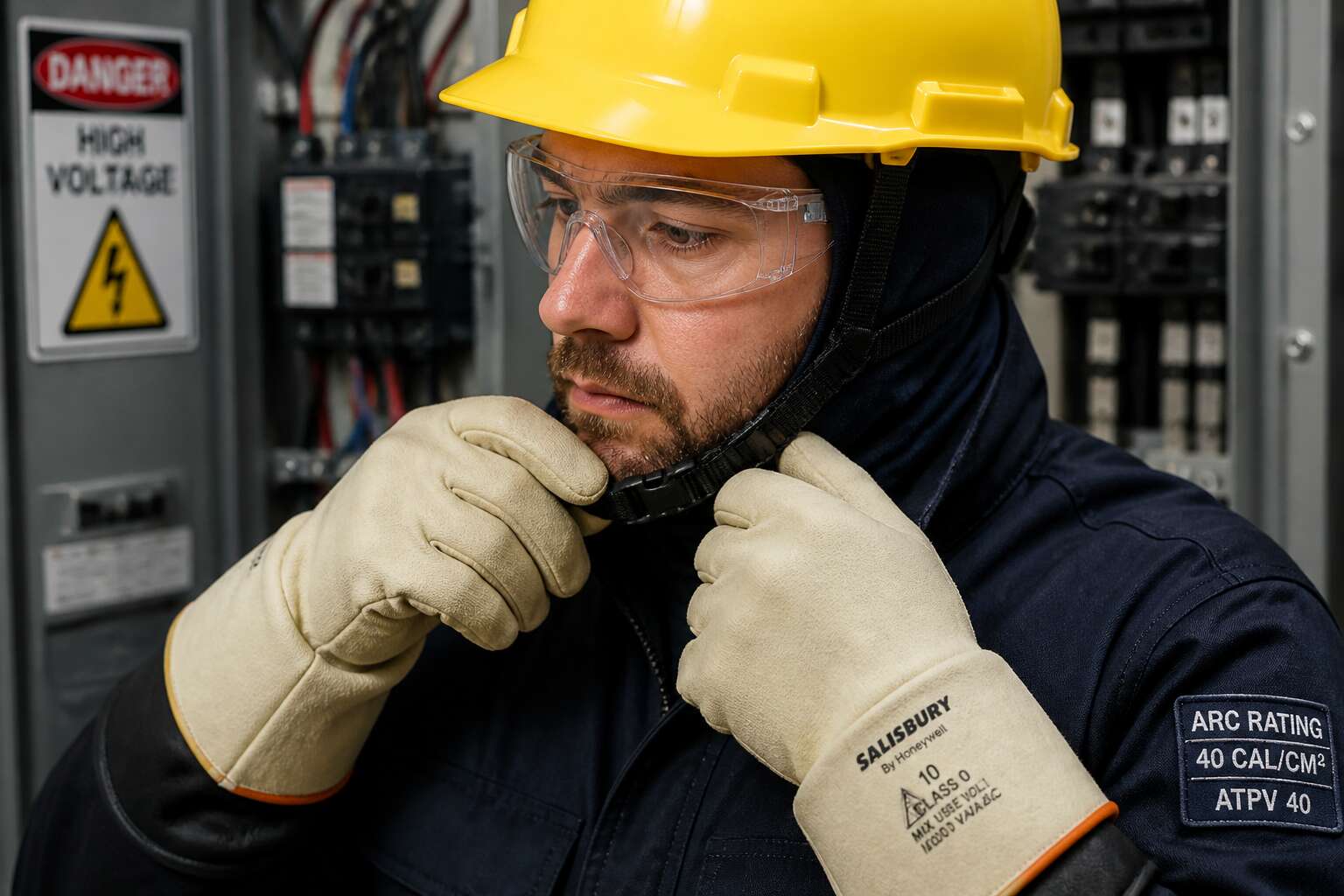
The loudest silence on a job site is the moment a pair of hands reaches toward a live panel without proper protection. The hands are usually the first point of contact. An arc flash event creates extreme heat, but the immediate shock hazard is often what electricians expect to feel. Insulated gloves and leather protectors are the best defense for this specific risk.
Rubber insulating gloves are rated for different voltage classes. They are tested and stamped with a class number. These gloves provide a dielectric barrier. Leather protectors are worn over the rubber gloves. This leather does not provide electrical protection. It shields the rubber from punctures, cuts, and UV damage. A tiny tear in the rubber can cause a catastrophic failure.
Here are the key points for using this system effectively:
– Always inspect the rubber gloves for holes before use. Fill them with air and listen for leaks.
– Check the leather protectors for embedded metal fragments or sharp debris.
– Store rubber gloves in their canvas bag, away from sunlight and heat.
– Match the glove class to the system voltage you are working on.
The dexterity loss is real, but the trade-off is necessary. Many electricians skip the leather protectors to gain a better grip. That choice exposes the rubber to damage. In the South African climate, sweat can degrade the rubber lining over time. Replacing gloves at the first sign of wear is cheaper than a hospital visit. Your hands are the tools that make everything else possible. Electrical work ppe is a complete system, and your extremities need their own dedicated layer of protection.
Voltage-Rated Footwear and Matting
Electricians forget their feet are part of circuit. Voltage rated footwear and matting complete electrical work ppe system. In South Africa, moisture on concrete floors creates an invisible path for current. Boots with insulated soles break that path. Matting adds second layer at panel.
Check the ASTM rating on your boots. Look for the F2413 standard. Inspect soles for embedded nails or metal shavings. A single puncture turns protection into a conductor. Rubber matting must meet the IEC 61111 standard. Place it around switchgear and test it.
Consider these checks:
- Examine the sole tread for deep cuts before every shift.
- Confirm the matting has no cracks or oil stains.
- Store boots away from direct heat and sharp objects.
The dielectric barrier only works if material stays intact. You cannot see voltage, so trust the gear that grounds your stance. That completes electrical work ppe.
Arc-Rated Hoods, Suits, and Blankets
Arc-rated hoods, suits, and blankets form the final barrier between skin and the explosive energy of an arc flash. In South African substations, where load shedding creates unpredictable switching conditions, this layer of electrical work ppe cannot be ignored. A hood shields the face and neck, the areas most exposed to thermal radiation. The suit distributes protection across the torso, while blankets cover busbars and live components during maintenance.
Consider what happens when a fault occurs. The hood’s visor absorbs intense UV light. The suit’s fabric resists ignition. The blanket prevents accidental contact. I have seen electricians rely on these items during live testing, and the difference between a close call and a tragedy often comes down to whether the gear was worn properly.
That is the core of electrical work ppe.
How to Select the Right Electrical PPE
Decoding Arc Ratings and Calorie Labels
Every arc-rated garment carries a number: the arc rating, expressed in calories per square centimeter. That number is a threshold. The equipment you service also carries a number, the incident energy level. When these two figures align, you have selected the correct electrical work ppe.
Three figures demand attention when choosing gear:
- The incident energy exposure from the equipment label.
- The arc rating of your PPE.
- The margin between them.
The calorie label states the available thermal energy at that specific point. Your PPE arc rating must equal or exceed that number.
Many workers read the calorie label as a comfort guide. It is not! It measures hazard intensity directly. A label reading 12 cal/cm² requires fabric that withstands that energy without break-open. Matching ratings is arithmetic, plain and simple. This is the real function of electrical work ppe.
Matching PPE to Voltage Class and Task Type
Voltage class dictates the insulating properties your electrical work ppe must possess. A 480V panel demands different glove ratings than a 12kV switchyard. Task type matters equally; performing a visual inspection while energized is not the same as operating a disconnect under load. For the latter, you need higher class rubber gloves and a full arc suit.
- Class 00 gloves for low voltage, below 500V AC.
- Class 2 gloves for medium voltage, up to 7.5kV.
- Class 4 gloves for high voltage, up to 36kV.
Always cross-reference the task’s incident energy with the equipment’s voltage rating. Selecting electrical work ppe without this dual check is guesswork. Your life depends on the margin between task demands and gear capabilities.
Sizing, Fit, and Comfort Considerations
An ill-fitting glove can be more dangerous than none at all. It rolls, bunches, and breaks your grip at the exact moment you need precision. Sizing for electrical work ppe starts with manufacturer charts, but those charts are only a starting point. Measure your hand circumference and length, then test the gear while wearing your base layers.
Consider these fit checks:
- Lift both arms overhead; sleeves should not pull away from gloves.
- Squat and bend; trousers should not restrict movement.
- Rotate shoulders; seams should stay in place.
Comfort is what keeps you focused during a long shift. A hood that pinches or boots that rub will distract you from the task. Try gear on in the same configuration you will wear it on the job, including insulating rubber gloves and leather protectors. Heat stress is a real concern; breathable fabrics matter in South Africa’s climate. When electrical work ppe fits properly, you forget you are wearing it. That is the point.
Comparing Fabric and Material Options
Selecting the right electrical work ppe begins with understanding how each fabric behaves under extreme heat. Untreated cotton ignites and continues burning. Meta-aramid and modacrylic blends self-extinguish, while some fibres melt onto the skin, which changes the entire risk profile. Leather and rubber create distinct barriers against different hazards.
Compare materials across these properties:
- Arc thermal performance value versus breakopen threshold
- Thermal shrinkage, melting point, and ignition resistance
- Weight, breathability, and moisture management for South African climates
- Laundering durability and chemical resistance
Some materials stop shock but fail under arc flash. Rubber insulates against voltage yet offers no arc protection. A fabric’s arc rating must align with its physical durability in industrial environments. Insist on certified materials that match the task’s caloric exposure. The right electrical work ppe balances these properties without compromising movement.
Selecting PPE for Live Work vs. De-Energized Systems
Selecting PPE for live work demands a different mindset than for de-energized systems. When you work on a live panel, the arc rating must match the calculated incident energy. When the system is de-energized, you still need electrical work ppe, but the primary threat shifts to stored capacitance and accidental re-energization. I always verify the voltage-rated gloves first, then the arc-rated layers. For de-energized tasks, the risk is less intense, but the discipline remains the same. Consider these checks for both scenarios:
- Confirm the system is verified locked out and tagged out.
- Assess residual charge with a rated tester.
- Wear arc-rated layers that cover the full torso.
Even a de-energized bus can hold a lethal charge. The correct electrical work ppe for a live task may be a full arc flash suit; for a dead system, a simple FR shirt and insulating gloves often suffice. Match the gear to the actual hazard, not the label.
Inspection, Maintenance, and Proper Use
Pre-Use Inspection Checklists for Electrical PPE
A single missed crack in an insulating glove can turn a routine task into a tragedy. Pre-use inspection is the last barrier against an arc flash event. For anyone handling electrical work ppe, this step is non-negotiable.
Start by examining each item under bright light. Run your hands over the surface of gloves and sleeves. Look for punctures, abrasions, or embedded contaminants. For rubber goods, perform an air test. Check the expiration date on every component. Verify that your voltage-rated footwear has no cuts or worn treads. Inspect arc-rated hoods for degraded face shields and intact seams.
- Inspect leather protectors.
- Test zippers and snaps.
- Check headgear suspension.
Document every inspection. A checklist protects you. Never assume gear is ready because it was fine yesterday. Your electrical work ppe must be proven safe each time.
Cleaning, Storing, and Extending the Life of Gear
Cleaning electrical work ppe is a practical task. Dirt and grease hide tiny cracks that only show themselves mid-flash. Wash arc-rated clothing according to the label, and skip fabric softener. That product reduces flame resistance.
Storage matters too. Never fold rubber gloves into sharp angles or leave them near sunlight. Use a canvas bag, and keep them cool and dry. For gear that sees regular use, adopt a simple rotation schedule:
- Wipe down after every shift.
- Replace any component with questionable integrity.
- Log every cleaning and repair.
Proper use also means knowing when to retire gear. Scratches on face shields, stretched headbands, faded labels. They all signal the end. Respect the limits of your electrical work ppe, and it will continue to protect you.
When to Replace Expired or Damaged Equipment
Inspection is where discipline meets danger. A quick glance is not enough. You must run fingers along seams, flex materials, and look for weaknesses a casual eye would miss. Electrical work ppe that appears sound from a distance can fail at the critical moment.
Each component carries a manufactured lifespan. Rubber insulating goods have test dates that cannot be ignored. Once that stamp passes, the gear has no place on a live site.
- Check for punctures, embedded debris, or swelling
- Verify test stamps and expiry markings
- Feel for hardening, softening, or sticky residue
Retirement is the natural conclusion of service for any piece of protective equipment. Replacing worn gear before it is needed costs far less than trusting it one shift too many.
Proper Donning and Doffing Procedures
Inspection is not a ritual; it is the practical start of every job. For electrical work ppe, the process begins in the hands. Slide palms over every surface, checking for cuts, hardening, or embedded debris before a single piece is placed on the body. Buckles, zippers, and straps deserve the same attention as the fabric itself.
Maintenance follows a simple rhythm. Store gloves in their bags, hang suits away from moisture, and keep matting dry. Neglect in these small acts compounds quickly.
Proper donning and doffing procedures prevent contamination from becoming contact. When removing electrical work ppe, the order matters as much as the fit. Peel off outer layers first, then move inward.
- Remove the arc-rated hood or face shield before gloves.
- Take off gloves using the fold method, touching only the inside.
- Lay each item flat so the next inspection begins clean.
Use the same sequence every shift.
Avoiding Common Misuse and Incompatibility Issues
Using electrical work ppe correctly means understanding its limits. Mixing mismatched components, like pairing a lower rated glove with a higher rated sleeve, creates a false sense of safety. Similarly, rolling sleeves instead of leaving them properly extended compromises the arc path. These small errors often go unnoticed until a fault occurs.
Maintenance feeds directly into proper use. A glove with a pinhole or a suit with degraded elastic cannot perform as intended. The care routine is simple: keep gear dry, store it separately, and avoid folding materials in ways that stress seams.
- Wearing leather protectors over damaged rubber gloves
- Using tools that violate the voltage class of the electrical work ppe
- Stacking wet matting or storing PPE near heat sources
Incompatibility extends beyond ratings. Different fabric blends may react unpredictably when layered. When in doubt, consult the manufacturer’s compatibility table before relying on a combination.
Training, Compliance, and Building a Safety Culture
Educating Teams on PPE Limitations and Capabilities
A worker who cannot explain why their gear fails is a hazard. In South Africa, electrical work ppe often sits unused until an incident occurs. That gap costs lives. Training must go beyond donning and doffing. It should cover each item’s breaking point, its arc rating, and the precise moment it becomes useless.
Compliance is the baseline. A safety culture builds beyond it. Workers need to see supervisors wearing the same equipment, checking tags, and halting jobs when gear looks suspect. That behaviour carries more weight than any laminated poster! Documented authorisation to work means nothing if the team has not internalised when to refuse a task.
- Ask each worker to identify damaged stitching or cracked lenses before starting a shift.
- Run short refresher drills monthly, not annually.
- Encourage near-miss reporting without blame.
When teams truly grasp the limits of electrical work ppe, they respect it. That respect drives consistent use on every live panel.
Documenting PPE Selection and Incident Logs
Every incident log tells a story, but only if someone reads it. In South Africa, electrical work ppe records often sit untouched. That is a missed opportunity. Documentation should drive training, not merely satisfy auditors.
When you log why a particular glove or faceshield was selected for a job, you create a reference for the next shift. Workers can see the reasoning behind each choice. That builds competence. Add near misses and equipment failures to the same log. Patterns emerge.
- Date, task, and voltage class
- Specific electrical work ppe items used
- Condition of gear before and after
- Any anomalies or close calls
Compliance becomes real when supervisors review these logs and adjust training. A team that sees its own history learns faster. That is safety culture.
Creating a PPE Audit and Enforcement Routine
Audits turn paperwork into practice. I have opened storage lockers in Durban where the electrical work ppe looked flawless from the outside, then found cracked insulating material hidden in the folds. A routine audit reveals what a quick glance misses.
The enforcement side follows a simple rhythm. Supervisors confirm gear before each task. Workers check their own kit after every shift. When someone fails, the response is retraining, not punishment. The checklist stays short:
- Verify electrical work ppe against the job’s voltage class.
- Confirm inspection dates match the incident log.
- Questionable items get replaced before work starts.
That rhythm builds a culture where compliance is ordinary. Teams stop treating the audit as a checkpoint and start treating it as part of the work itself.
Encouraging Peer Observation and Reporting
Training that sticks is not a yearly slide show. It is repetition until the correct behaviour feels automatic. On a site near Durban, I watched a young electrician hesitate before touching a switchboard. He paused, checked his electrical work ppe, then proceeded. Nobody had told him to. That pause came from training that had become habit.
Compliance follows when teams understand why the rules exist. Peer observation turns that understanding into a shared responsibility. When a colleague spots frayed strapping or a missing arc rating label, they speak up immediately. Reporting is not about catching mistakes. It is about protecting the person next to you.
A simple rhythm reinforces this culture:
- Start every shift with a gear check.
- Call out hazards without waiting for a supervisor.
- Thank the person who flags your error.
Aligning PPE Programs with Industry Best Practices
Training that aligns with industry best practices changes how a team perceives risk. I have watched crews in Gauteng treat their electrical work ppe as essential equipment, not an inconvenience! That attitude develops through structured drills and open discussion of near misses. Supervisors who join the drills reinforce the message without saying a word.
- Review incident reports from your own site.
- Inspect gear together at the start of each week.
- Adjust training when conditions change.
Compliance becomes sustainable when it becomes part of the daily routine. A worker who understands why each layer of protection matters will check the arc rating before every task. Safety culture grows from that repeated attention. It is quiet, consistent, and it saves lives. The goal is for correct behaviour to feel automatic.


0 Comments