
The Fundamentals of Personal Protective Equipment
What Constitutes PPE?
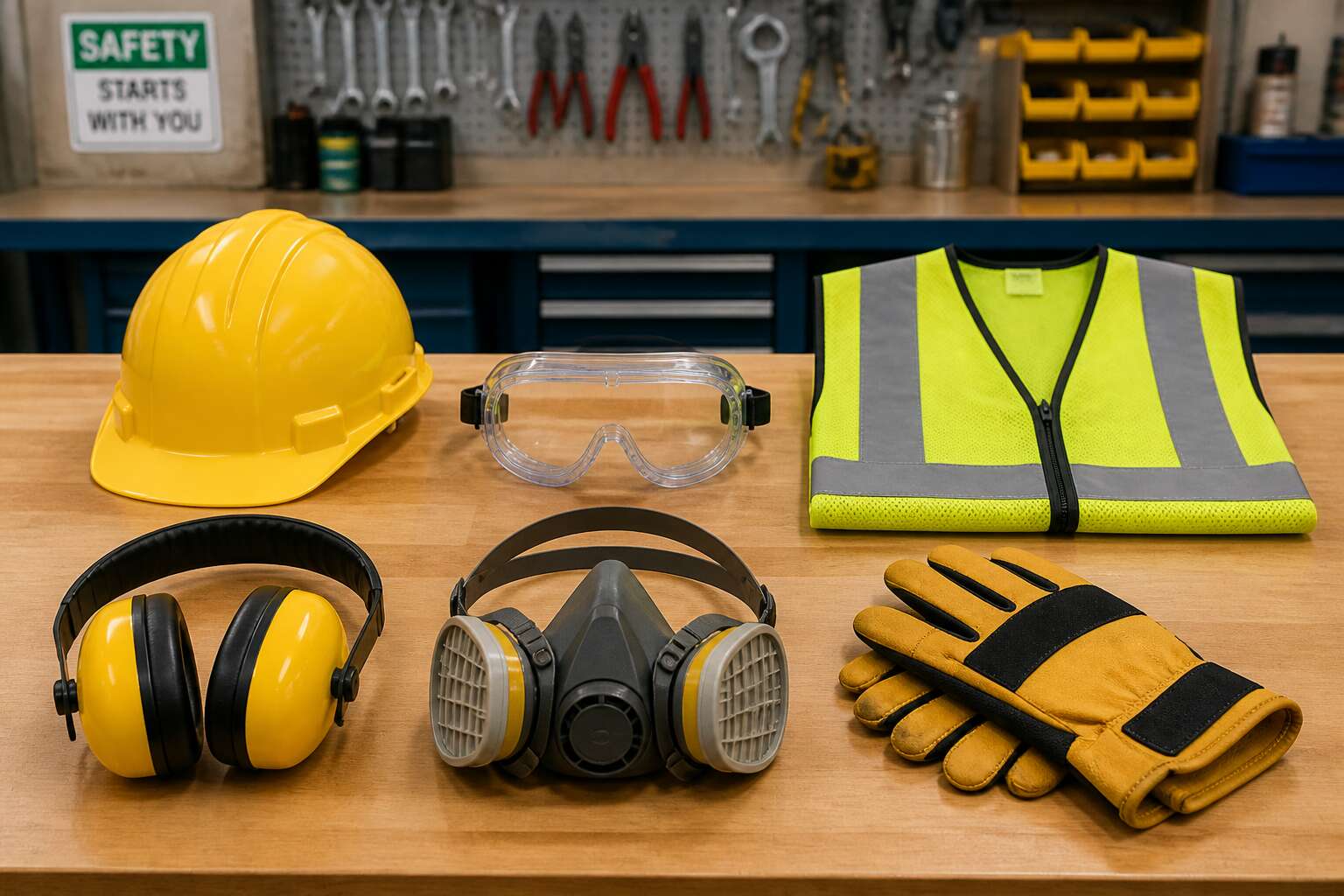
What counts as personal protective equipment? It is more than a hard hat and a high-visibility vest. PPE covers everything from respirators and face shields to safety boots and cut-resistant gloves. Each item must address a specific hazard present in your workplace. A bandana tied over your nose does not offer meaningful protection, regardless of how rugged you feel!
South African regulations demand that gear undergo proper testing and fit each worker individually. A loose harness will not catch you, and cracked goggles will not shield your eyes. Adhering to ppe requirements means selecting equipment based on risk assessment, not on what looks impressive in a staff photo.
Categories of Protective Gear
Your nose is not a particulate filter. Neither are your eyelashes. South African ppe requirements demand that each body part gets its own dedicated protection, and that means understanding the categories of protective gear. Head, respiratory, eye and face, hand and arm, foot and leg, and full body systems each address a distinct hazard.
- Head: hard hats for falling objects.
- Respiratory: filters for airborne junk.
- Eye and face: shields for splashes and sparks.
- Hands and arms: gloves for cuts, chemicals, heat.
- Feet and legs: boots for crush and puncture.
- Full body: suits and harnesses for environmental or fall risks.
Each category requires its own testing and fit. A worker with the wrong glove size or a cracked visor fails the test, even if it passes a casual glance.
Selecting the Right Equipment
A single loose strap has ended more careers than any machine. Selecting the right equipment demands a slow, unforgiving examination of every hazard embedded in a task. South African ppe requirements hinge on this truth: protection only functions when it becomes part of you. I have watched workers wear a respirator without sealing it, and that negligence ends in failure!
- Assess the actual environment, not the manual.
- Measure fit against the worker, not the average.
- Check compatibility across all gear layers.
- Inspect for cracks, worn seams, and collapsed padding.
Each choice carries serious consequences. A visor that fogs under pressure fails quietly. A boot that pinches distracts attention from falling steel and shifting crush hazards. The right equipment meets a standard of care, and the terms are never repeated. Complying with ppe requirements means accepting that nothing optional exists.
Roles of Employers and Employees
Compliance is not a file on a supervisor’s desk. It is a daily negotiation between what the law demands and what a tired worker actually does. ppe requirements in South Africa split this negotiation into two clear responsibilities.
- Assess every workstation and update gear specifications when hazards change
- Provide training that covers fitting, limitations, and signs of failure
- Maintain a stock of replacements so no worker ever faces a shortage
- Investigate each incident of noncompliance without blaming the victim
The employee must align actions with policy, not with convenience. Wearing a helmet at the gate and removing it in the heat does not satisfy the standard. Checking a visor for cracks before every task takes twenty seconds. Reporting a compressed boot or a loose strap is a professional obligation. ppe requirements only succeed when that personal audit becomes automatic. And automatic does not mean optional!
Hazard Assessment and PPE Selection
Step-by-Step Hazard Identification
Beneath the hum of machinery lies a silent calculus of risk. Every South African workplace harbors its own spectres, and the ppe requirements force you to summon them into the light before they claim their pound of flesh.
Begin with a systematic walkthrough, observing each task as if it were a ritual of survival. Note the grind of metal, the hiss of steam, the quiet seep of toxins.
- Identify the source of harm.
- Trace the path of exposure.
- Document the potential consequences.
This tripartite sequence turns vagueness into clarity. With each hazard named, selection becomes an act of precision. Revisit your assessment whenever a process shifts or an incident whispers a warning.
Matching Equipment to Risks
Once the hazard assessment names the threat, matching equipment becomes a precise act. The ppe requirements do not allow guesswork. A chemical splash calls for a face shield with a specific resistance rating, while impact hazards demand polycarbonate lenses. The wrong pairing leaves the worker exposed, sometimes invisibly.
Consider noise. A decibel reading of 95 dB requires earmuffs with a certain attenuation level, not merely any hearing protection. Similarly, handling asbestos fibres means a respirator with particulate filtration, not a dust mask. The assessment data drives every choice:
- Welding fumes require a half-face respirator with particulate filters.
- Molten metal splash demands a full-face shield over safety glasses.
- Working at height calls for a harness rated for the specific fall distance.
Review the selection against the task itself. In my experience, if the equipment restricts movement or communication, the worker will discard it. The ppe requirements must account for human behaviour as much as physical danger.
Documenting Assessment Results
The hazard assessment loses its authority the moment it stays in someone’s head. Documentation turns observations into a reference that survives staff changes, shift rotations, and site audits. Without a written record, the ppe requirements become a matter of opinion rather than a matter of fact.
Record the date, the task, the identified hazards, and the selected equipment. Note who conducted the assessment and who approved it. This creates a traceable line between the danger and the defence. Department of Employment and Labour inspectors expect to see this trail.
- Date and time of the assessment
- Specific hazards identified per work area
- Rationale for each equipment selection
- Review dates for ongoing validity
Review the document whenever tasks change or incidents occur. A static file is a liability. The ppe requirements evolve with the work, and the record must reflect that evolution.
Training, Maintenance, and Lifespan
Comprehensive Employee Training
South African workers lose hundreds of shifts each year to preventable gear failures. Without proper training, even the finest equipment becomes unreliable. I have seen workers treat their gear as an afterthought, yet ppe requirements demand more than possession. Training transforms equipment into a dependable safeguard. Countless hours vanish into routine, so make them count!
Maintenance follows next. Scratches on a visor, frayed straps, or cracked soles signal wear. Rust from humidity or brittleness from sun exposure accelerate decline. Lifespan is measured in exposure, impact, and care, not only in calendar days. A glove that caught a spark today might fail tomorrow. In South Africa’s heat and dust, decay speeds up. Regular checks extend reliability. Place your faith in daily rituals.
Indeed, meeting ppe requirements means honouring your gear through consistent care, and it will protect you when you need it most.
Proper Fitting and Adjustments
Proper fitting transforms ppe requirements from paperwork into physical reality. A harness that pinches or a helmet that shifts undermines protection. In my experience, workers adjust once and forget, but bodies change, layers differ, and gear stretches.
Consider routine checks:
- Strap tension after every shift
- Seam integrity under stress points
- Visor alignment with the face
Adjustments are not a sign of weakness. They are calibration. Lifespan extends when you tighten a buckle before it scrapes, or realign a pad before it compresses. Neglecting fit accelerates wear, turning a minor irritation into a replacement cost. Honor the gear’s limits, and your gear honors your safety.
Cleaning and Storage Best Practices
A worker’s memory is shorter than a cable’s service life. Training is the ritual that keeps memories long, but maintenance is the physical proof that the lesson stuck. We can recite the ppe requirements from memory, yet ignore the faint fraying on a lanyard. That is a dangerous kind of forgetfulness.
Observe how a crew treats its gear after a long shift. The tools go back on the rack, but the helmets rest on dusty dashboards. A quick poll reveals a peculiar social habit. Workers tend to prioritize comfort over scrutiny. They will adjust a strap for feel, never for integrity.
Here is what they should be looking for:
– Deformation in the shell that suggests an impact we did not report.
– Odour or discoloration that hints at chemical exposure.
– Cracks near attachment points that are invisible at a glance.
Lifespan is a negotiation between the material and the climate. In South Africa, the sun is a silent participant in every inspection. UV degradation is not a myth; it is a slow erasure. Cleaning gear with the wrong solvent is equally destructive. Warm water and mild soap serve better than harsh industrial degreasers. Store equipment in a cool, dry place, away from direct sunlight and exhaust fumes. A helmet left on a rear window shelf ages a decade in one summer. Respect the storage rules and the gear will respect your timeline. The ppe requirements are the floor. The upkeep is the ceiling.
Inspection Schedules and Replacement
Training for inspection means teaching a worker to notice subtle signs of wear. The ppe requirements are the minimum, but a flaking shell or a sticking buckle says more than any checklist.
Maintenance follows a cadence. Daily, run fingers along webbing for snags. Weekly, test attachment points. Monthly, log the condition. Use an ordered list:
- Visual scan for cuts or stress marks.
- Functional test of clasps and adjustments.
- Compare with the manufacturer’s date stamp.
Lifespan inspection schedules are not guesswork. South African UV ages a helmet in direct sunlight faster than expected. Replacement is a decision made before failure. When a lanyard absorbs an impact or a strap frays at the anchor, retire it immediately.
Addressing Equipment Failure
Training for failure means understanding how a harness behaves after a hard fall. The ppe requirements set the baseline, but field reality exposes weaknesses that manuals cannot predict. Workers should know the difference between a scuff and a structural crack, and they should trust that instinct when they flag gear.
Maintenance is a daily ritual, not a quarterly chore. A webbing fray hidden under a tool belt can cause serious injury. Use a simple checklist:
– Run gloves along every stitch line.
– Inspect buckles for bent pins.
– Check the stitching at load-bearing seams.
Lifespan is finite. South African sunlight degrades polymers quietly. When a shock absorber deploys or a strap snaps at the anchor, retirement is not a suggestion. It is a direct consequence of the ppe requirements in action.
Regulatory Compliance and Legal Obligations
Key Regulatory Frameworks
South African law does not negotiate on protective equipment. The Occupational Health and Safety Act of 1993 places ppe requirements squarely on employers. Noncompliance carries serious legal consequences. The Department of Employment and Labour can issue compliance orders, halt operations, or pursue criminal charges. Key regulatory instruments include:
- General Safety Regulations, which set baseline equipment standards
- Hazardous Chemical Agents Regulations, which govern respiratory and skin protection
- Construction Regulations, which mandate site-specific protective measures
The legal framework extends beyond distribution. It demands documented risk assessments, certified equipment aligned with South African National Standards, and verifiable enforcement procedures. Inspectors scrutinize whether these ppe requirements match workplace hazards and whether employers maintain audit trails.
I have seen how regulatory oversight sharpens safety culture. When companies treat legal obligations as operational fundamentals, compliance becomes unremarkable. The law remains unambiguous. The obligation stays absolute!
Workplace Safety Standards
South African inspectors have a favourite pastime: checking whether your ppe requirements match the hazard register, not the poster on the wall. One missing respirator cartridge audit trail and a compliance order lands on your desk. The law does not care about intent, only evidence. I have watched inspectors flip past glossy safety policies to find the last equipment inspection date. Enforcement officers routinely probe three things:
- certification against SANS standards
- condition of the equipment
- chronological fit with the hazard register
If your hard hats are older than your apprentices, that is a problem. Compliance is not a once-a-year ceremony. It is a continuous loop of verification, correction, and documentation. Treat legal obligations as operational fundamentals, and inspectors become unremarkable visitors. Neglect them, and the Department of Employment and Labour becomes your most persistent correspondent!
Auditing and Recordkeeping
Auditing is where ppe requirements are proven. I have seen companies with flawless induction training stumble because their audit trail ends at a purchase order. The law demands a chronological record: every hazard assessment, every issue of equipment, every inspection, every disposal. Without that record, you are not compliant, you are merely present!
Your recordkeeping should answer three questions without a single phone call:
- When was each item last inspected?
- Who signed off on its condition?
- Which hazard in the register justifies its use?
If your files cannot answer those, the Department of Employment and Labour will answer for you. Audits carry legal weight. They are the only proof that your compliance is real.
Consequences of Non-Compliance
The Occupational Health and Safety Act does not negotiate. Ignoring ppe requirements in South Africa leads to automatic fines, prohibition notices, and criminal liability. A single overlooked hazard can stop production for weeks. Your company’s reputation suffers alongside its balance sheet. The Department of Employment and Labour inspects without courtesy.
Directors personally face prosecution. Employees who are injured become plaintiffs. Insurance premiums climb. Legal fees compound. Every violation carries a penalty:
- Fines exceeding R100,000
- Imprisonment for up to two years
- Immediate shutdown orders
Non-compliance is a deliberate choice. The consequences become your permanent record. There is no amnesty for negligence.

0 Comments