
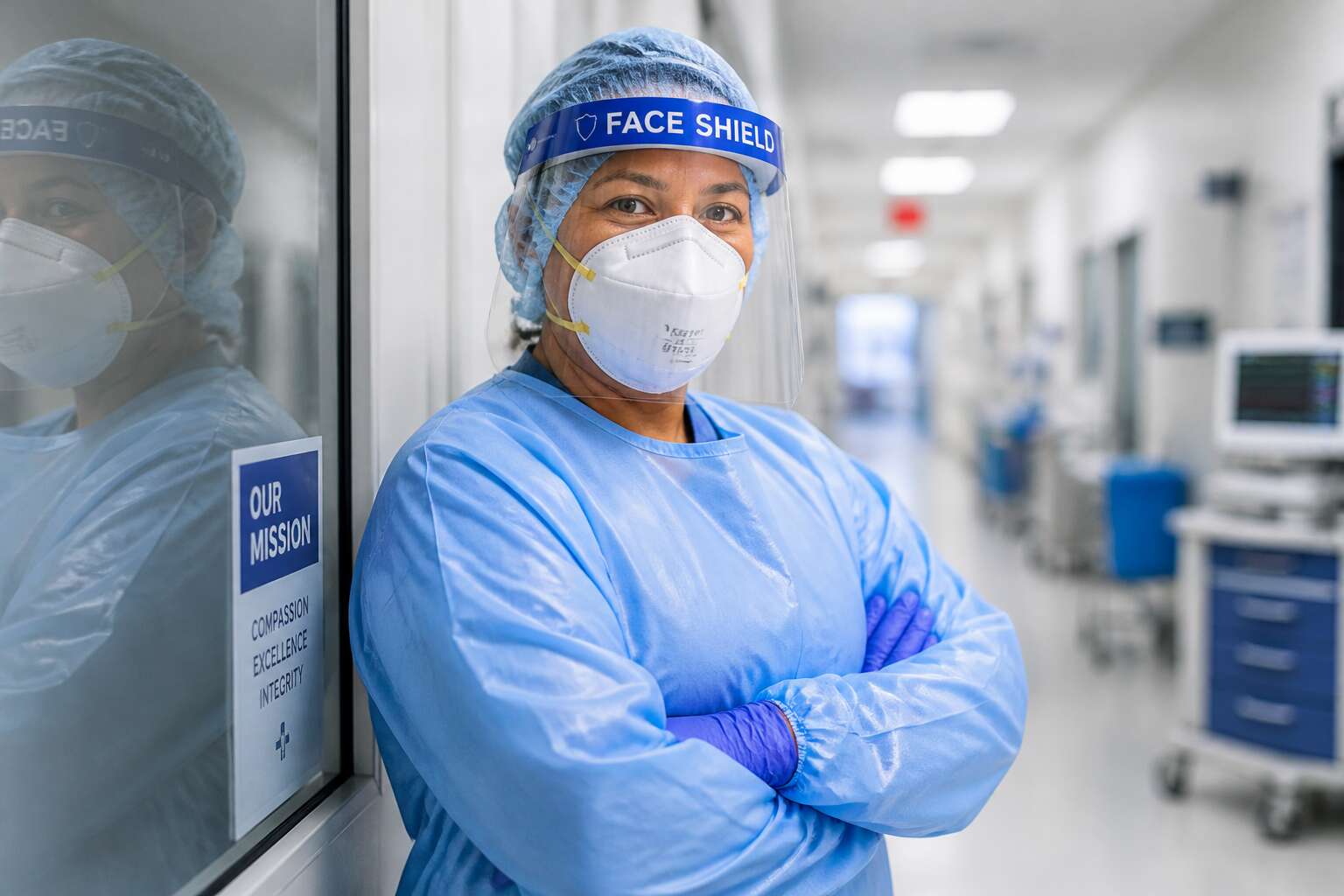
Evolving PPE Standards and Regulations
Updated OSHA Guidelines for Workplace Safety
One year after the pandemic upended every workplace assumption, the Occupational Safety and Health Administration issued its most transformative guidance in a decade. For South African employers, these updates echo beyond borders, reshaping how we approach ppe 2021.
The revised framework no longer treats personal protective equipment as a static checklist. It demands a continuous risk assessment loop. Breathing zones, task duration, and climatic stress now factor into what gear actually protects. That shift matters here, where heat and humidity can compromise compliance faster than any regulation.
- Hierarchy of controls now prioritizes engineering solutions before any gear is issued.
- Fit testing for respirators has moved from a recommendation to a baseline expectation.
- Documentation must capture every change in hazard exposure, not just annual reviews.
What impresses me most is the new emphasis on worker input. Someone who wears a respirator for ten hours a day notices the smallest flaw in an exhalation valve. The updated guidelines finally recognize that experiential knowledge. Any serious audit of ppe 2021 now starts with those administrative records.
New Compliance Requirements Across Industries
During a routine audit at a KwaZulu-Natal chemical plant, an inspector found respirator cartridges stored in direct sunlight. That oversight triggered a shutdown and a fine. In the ppe 2021 era, regulators have layered new compliance requirements across industries, from healthcare to construction. South African companies face the same pressure.
Standards have evolved beyond simple material tests. New frameworks assess how gear interacts with the wearer’s physiology and work rate. The SANS 50130 series now mirrors European norms for barrier performance. The mining sector faces updated certifications for head protection and respiratory equipment.
The compliance landscape requires:
- Documented fit testing for every respirator user.
- Quarterly recalibration of gas detection instruments.
- Certificates of conformity tracing each item to its batch.
These requirements respond to failures where correct equipment was issued in the wrong configuration. Procurement teams now verify every glove, respirator, and visor carries the appropriate SABS mark.
Global Harmonization of PPE Certification Standards
A respirator approved in Frankfurt once failed an audit in Johannesburg over a single missing pictogram. That friction is fading. Global harmonization of PPE certification standards is reshaping how South African companies source and verify safety gear. In the ppe 2021 era, mutual recognition agreements and shared test protocols allow a certificate issued in one country to hold weight in another.
- Common baseline tests for impact, penetration, and flammability
- Harmonized marking systems that simplify visual inspection
- Cross-border databases for product recalls and failure reports
These mechanisms reduce import delays while keeping oversight rigorous. Manufacturers now design for multiple markets at once, moving verification upstream. For South African procurement teams, foreign certification evidence has never carried more authority. The ppe 2021 conversation is effectively a global one.
Impact of Public Health Emergencies on Regulation
The pandemic cracked open regulatory processes that had not changed in decades. What emerged were leaner, faster pathways for approving protective equipment.
Emergency use authorizations became a global experiment in regulatory triage. South African buyers saw overseas agencies approve respirators in weeks, not years. That speed forced everyone to re-examine the assumption that slow regulation meant safe regulation.
Public health emergencies teach specific lessons:
1. Static standards fail fast under real pressure.
2. Shared clinical data moves approvals faster than border negotiations.
3. Temporary flexibilities, once proven, tend to stay.
The ppe 2021 marketplace reflects that permanent shift. Compliance now means tracking evolving standards, not memorizing old ones. Regulators keep the framework, but they bend it to match the threat level. Buyers who ignore this rhythm will own gear that fails the next audit.
Industry-Specific PPE Mandates and Enforcement
Safe for whom? The ppe 2021 environment answers with a sector-specific shrug. Mining inspectors check quantitative fit testing records while hospital auditors chase sterilisation logs; neither cares about the other’s paperwork.
- Mines demand dust exposure data with each respirator batch.
- Hospitals require biocompatibility certificates for every glove.
- Construction sites flag UV-degraded hard hats as grounds for on-the-spot fines.
Enforcement crews treat these mandates as separate fiefdoms. A supplier who masters one industry’s quirks gains protection, but that knowledge rarely transfers. Buyers who assume their current certificates cover new sectors will discover the gaps during the final inspection.
Key Types of Personal Protective Equipment in High Demand
Respiratory Protection and Filtering Facepieces
Respiratory protection defined the ppe 2021 procurement landscape, with filtering facepieces such as FFP2 and N95 variants topping every South African safety officer’s requisition list. Supply could not match demand, and companies scrambled to verify filtration efficiency and fit-testing certification before purchase!
These devices are engineered barriers. Electrostatic melt-blown layers capture airborne particulates, while exhalation valves reduce heat build-up during extended wear. But a respirator fails its purpose without a proper seal check. A facepiece leaking at the nasal bridge offers only ceremonial protection.
Counterfeit products proliferated across the supply chain that year. Buyers had to scrutinise:
- embossed manufacturer markings
- batch and lot identification codes
- certification logos from accredited testing bodies
Verification became as important as the physical product itself.
Hand and Skin Protection Solutions
The hands became a focal point of ppe 2021 procurement strategies. While respirators guarded the airways, the skin faced its own crisis. Repeated hand washing and sanitizer use degraded natural oils, leaving healthcare workers and factory staff with cracked, bleeding skin. Nitrile gloves offered protection but trapped moisture during extended wear, creating new dermatological problems.
- Nitrile examination gloves with extended cuffs
- Barrier creams formulated for frequent reapplication
- Alcohol free skin conditioners for post shift recovery
Procurement officers learned that hand protection required a layered approach. The right ppe 2021 strategy acknowledged that a worker who dreads wearing gloves will find reasons to remove them. Comfort and compatibility became safety metrics, not optional extras. Skin integrity, once overlooked, emerged as a core component of workplace resilience.
Eye and Face Protection for High-Risk Tasks
One missed splash can rewrite a human life in under a second. The ppe 2021 procurement cycle exposed how often eye and face protection was treated as an afterthought, until the visible consequences of neglect appeared on injury registers. Buyers in South African mining, steel, and chemical sectors now demand equipment that acknowledges human fallibility.
The critical realisation involved the physics of fatigue. A visor that fogs up mid-task gets removed. Anti-fog technology and impact rated polycarbonate lenses changed the calculus, but no specification can outmuscle a tired worker’s desire to see clearly. For high risk tasks, the minimum acceptable kit included:
- Wraparound goggles with indirect ventilation
- Full face shields with chin guards for grinding and cutting
- UV resistant eyewear for welding support roles
Compliance demands honesty. A ppe 2021 strategy that fails to account for the silent moment when a worker tilts the shield upward is a strategy built on paper, not on skin.
Protective Clothing and Full-Body Suits
Protective clothing carries a different kind of burden. It sits on a body for twelve hour shifts, absorbing sweat, sparks, and chemical mist before danger registers. In South African steel and foundry operations, the ppe 2021 procurement cycle pushed buyers toward multi layer flame resistant fabrics. Thicker means safer collapsed under heat stress data. A welder who strips off a heavy jacket to cool down is unprotected. Comfort is a safety feature.
Full body suits demand honesty about fit. A puncture at the knee or a tear at the shoulder turns sealed protection into a hazard. Buyers in chemical plants now request:
- Multi layer FR coveralls with arc flash ratings for live electrical work
- Chemical splash suits with taped seams and replaceable visors
- High visibility rain gear for outdoor maintenance crews
The ppe 2021 lesson from Gauteng and Mpumalanga factories is that workers discard poorly designed suits at the worst moments. A garment that limits movement rarely stays on for long.
Hearing Conservation and Noise Control Gear
Noise packs no visible wound. There is no blood, no burn, only a slow erosion of perception. In South African foundries and assembly plants, grinding stations and stamping presses routinely run past 100 decibels.
Hearing conservation gear became a focused category in the ppe 2021 procurement cycle. Buyers shifted from generic foam plugs toward custom moulded options and communication capable headsets.
- Ear muffs with level dependent circuitry for line work
- Dielectric models for electrical environments
- Anti microbial plugs for shared crew lockers
Compliance is the struggle. A worker removes protection for ten minutes while a drill runs and loses the benefit of eight hours of wear. Hearing loss claims continued climbing, not from absent gear, but from gear disconnected from real tasks.
Innovations and Technology in PPE Design
Smart PPE with IoT and Real-Time Monitoring
A hard hat that transmits your heart rate to a control room is no longer science fiction. In ppe 2021, smart personal protective equipment is changing workplace safety. Sensors inside hard hats and vests transmit data on heat stress, impact force, and fatigue to a supervisor’s dashboard in real time. This is the internet of things applied to safety gear.
South African mines and plants are starting to adopt these connected garments. A sudden stillness triggers an alert. I have seen a glove that buzzes when a hand enters a danger zone. The gear becomes an active monitor.
Real time monitoring can provide several benefits:
- Location tracking of each worker
- Automatic alerts on hazardous gas exposure
- Body temperature spikes that signal collapse risk
But ppe 2021 requires more than hardware. It needs a trusted network, strict data privacy, and human oversight. The technology extends awareness; it does not replace judgement.
Advanced Materials for Enhanced Durability and Comfort
Fabric engineering has moved beyond simple abrasion resistance. In ppe 2021, the quiet revolution happens at the molecular level, where polymers blend with aramid fibres to create textiles that feel lighter than cotton yet withstand sparks and tears. A welder in Gauteng no longer chooses between mobility and shielding. Micro-porous membranes let sweat escape while blocking chemicals and particulates.
Comfort is a safety feature, not a luxury. Better fit reduces fatigue, lowers heat stress, and sharpens attention. Manufacturers now test for flexibility, breathability, and weight, not only burst strength. Reinforced elbows use a honeycomb weave that spreads stress away from fragile seams. Durability and comfort are converging in ppe 2021, and the workplace absorbs the benefit.
- Graphene-infused coatings that dissipate heat
- Phase change materials that absorb excess body warmth
- Anti-microbial liners that reduce odour and bacterial buildup
Ergonomic Improvements for Extended Wear
Spend a full shift in ill-fitting gear and you will learn why ergonomics is no afterthought! In ppe 2021, designers start from the wearer’s range of motion. Harnesses now distribute load across the hips instead of the shoulders, and glove patterns follow natural hand curvature rather than flat templates.
Consider the quiet refinements:
- Adjustable cuffs and hems that accommodate layering without bunching
- Seam placements moved away from high-friction zones
- Ventilation channels that align with posture changes
Even minute tweaks, like angled pockets and low-profile fasteners, reduce pressure points. The result is equipment that stays comfortable through repetitive motion, which means workers actually keep it on. Extended wear no longer demands endurance; it demands good design.
Sustainable and Reusable PPE Options
Single use respirators and gowns created enormous waste during the public health crisis. The shift toward circular design started with a simple question: can protection survive its own lifecycle? Manufacturers began testing biodegradable nonwovens and solvent free adhesives. Some harnesses and eye shields now snap apart for easy sorting.
Reusable options expanded through validated decontamination systems. Healthcare facilities adopted ultraviolet chambers and hydrogen peroxide vapor cycles that preserve filtration efficiency. One French consortium reported 97% material recovery from used facepieces.
- Modular headgear with replaceable visors
- Biobased polymers from sugarcane or corn waste
- Take back programs that recycle elastomers into gaskets
These approaches demand rigorous standards, but they also reduce raw material dependence. The ppe 2021 market finally treats waste as a design flaw, not an acceptable cost.
Antimicrobial and Self-Cleaning Fabric Technologies
Antimicrobial and self-cleaning fabric technologies moved ppe 2021 beyond simple barrier protection. Silver ion coatings and copper oxide particles now interrupt microbial replication on contact. These treatments bond at the fibre level, surviving industrial laundering and harsh disinfectants.
- Photocatalytic titanium dioxide that activates under ambient light
- Chitosan coatings derived from crustacean shells
- Quaternary ammonium salts grafted into polymer matrices
South African textile labs have tested these fabrics for reusable surgical gowns and patient handling aprons. The active chemistries degrade viral protein shells and bacterial cell walls, reducing pathogen load between uses. This shifts the design logic from passive filtration to active neutralisation.
Procurement and Supply Chain Considerations
Sourcing Strategies for Reliable PPE Supply
By 2021, procurement teams across South Africa understood that the cost of a missing shipment was far higher than the price of the gear itself. The worldwide healthcare emergency had exposed how quickly supply chains collapse when everyone orders from the same three ports. I have watched buyers learn to diversify before a shortage forced their hand.
Effective sourcing strategies now include several disciplines at once:
- Qualifying local manufacturers who meet SABS standards, reducing dependence on international freight
- Maintaining buffer stock of critical items like filtering facepieces and surgical gowns
- Auditing suppliers regularly to confirm that their certifications remain valid
For many organisations, the shift in ppe 2021 was not about finding cheaper products. It was about creating predictable supply through longer contracts and closer relationships with distributors. A supplier who understands your seasonal demand patterns becomes a partner, not a vendor.
Inventory Management and Demand Forecasting
South African procurement teams spent 2021 learning that ppe 2021 demand forecasting required constant attention to operational signals. Historical usage data provided a starting point, never a promise. Infection waves moved faster than freight ships, so ppe 2021 inventory management had to respond in real time.
The organisations that coped well reviewed storeroom data every day. They tracked consumption against production targets. A sudden spike in surgical glove usage often predicted a staffing crisis before any sick reports arrived. Reorder points shifted weekly, not quarterly.
Reordering discipline followed a simple rhythm:
- Check current stock against minimum thresholds every morning.
- Compare usage trends against the previous two weeks.
- Confirm supplier lead times before committing to an order.
Some teams held buffer stock without understanding consumption patterns and watched capital sit idle. Forecasts built without local knowledge produced shortages no one anticipated.
Qualifying and Auditing PPE Suppliers
Qualifying a PPE supplier in 2021 demanded more than reviewing certificates. South African procurement teams had to verify that documentation matched physical stock. A certificate without a corresponding batch test was worthless. The most resilient supply chains in ppe 2021 shared one trait. They audited suppliers before signing contracts, not after failures surfaced.
Audits focused on key control points:
- verifying test reports against batch numbers
- confirming storage conditions on site
- checking traceability from manufacturer to warehouse
Auditors also interviewed quality managers directly. They asked how nonconforming products were quarantined. Answers that referenced specific procedures built confidence. Vague responses triggered deeper inspections. This level of scrutiny separated reliable suppliers from those simply chasing ppe 2021 orders.
Balancing Cost and Quality in Procurement Decisions
Procurement in ppe 2021 forced buyers to confront a hard truth. The cheapest offer was rarely the most economical choice. A bid that undercut competitors by 30 percent often signalled compromised materials or skipped testing. South African procurement teams learned to scrutinise the gap between price and value.
Consider the true cost drivers:
– replacement purchases for failed batches
– production stoppages while waiting for substitutes
– liability exposure from substandard protection
– overtime costs from redoing affected work
These expenses multiplied quickly. Procurement that balanced cost with verified quality protected both the budget and the workforce.
A supplier charging a fair price for traceable, tested goods delivered better long-term value than any lower-cost alternative. That calculation defined smart purchasing in ppe 2021.
Navigating Import and Export Regulations
When I look back at ppe 2021, the customs desk felt like a gatekeeper with a grudge. Every shipment demanded precise documentation: certificates of origin, conformity declarations, and sometimes even a letter from the manufacturer explaining their testing protocol. One missing stamp and the container sat for two weeks.
The regulations shifted without warning. South African importers had to track changes from the South African Bureau of Standards alongside international rules. Exporters in other countries often mislabelled their goods, hoping the confusion would pass. It rarely did. I learned to verify every HS code before the ship left port. Delays cost money, but a rejected shipment cost more.
Training and Compliance for Effective PPE Utilization
Proper Fit Testing and Equipment Adjustment
Nearly a third of respirator wearers fail their initial fit test. In South Africa, where humidity accelerates fatigue, the stakes are higher. The ppe 2021 standard is not about issuing equipment; it is about verifying that it works for each body. A loose seal or a sloppy strap creates a false sense of protection.
Training must be hands-on. Workers need to practice donning and doffing until the motions are automatic. They need to know why a beard or a scar breaks a seal. Compliance is achieved through repetition, not through a signed form.
- Perform a negative pressure check.
- Perform a positive pressure check.
- Test for movement in the speaking valve.
Equipment adjustment is a daily habit. A crooked helmet signals a slipped habit. Post-training audits catch drift. The ppe 2021 reality demands that fit testing become a scheduled event, not an afterthought. Protection depends on it.
Developing Comprehensive User Training Programs
Compliance is a culture, not a checkbox. In South Africa’s high risk sectors, training programs must simulate real conditions, from heat stress to dusty winds. Workers who only watch videos will forget. Workers who handle the gear, adjust straps, and speak through respirators build automatic responses.
A structured curriculum includes modules for hazard recognition, donning sequence, and emergency removal. Then we test. Short drills, surprise inspections, and peer reviews keep standards sharp. For example, rotate supervisors across sites to verify consistent adherence.
The ppe 2021 framework rewards this approach. It asks employers to document every training session, but also to prove learning transfer. That means practical assessments. That means retraining after any incident. When training is continuous, compliance becomes instinct. And in an environment where equipment failure can be fatal, instinct is the final safeguard.
Maintenance, Inspection, and Replacement Protocols
A respirator with a cracked seal is a paperweight. In the ppe 2021 landscape, maintenance is not a janitorial chore. It is a compliance event. Workers must be trained to inspect gear before every use, not just when a supervisor is watching. They need to know what a stretched strap feels like, what a scratched visor hides, and when a filter has reached its limit.
Effective protocols tie replacement to wear patterns, not calendar dates.
- Check for discoloration, cracking, or deformation.
- Test straps and buckles under tension.
- Verify filter seals with a negative pressure test.
These checks become habits only when supervisors verify them daily. The ppe 2021 framework expects documented evidence of every inspection. But a logbook entry without a physical check is fiction. Routine audits should compare written records against actual equipment condition. That is where compliance becomes real.
Documentation and Record-Keeping Requirements
Training without enforcement fails. In the ppe 2021 landscape, compliance demands every worker demonstrates competence before touching a tool. I have seen sites where attendance sheets pass for education, creating gaps that audits expose.
Documentation holds the history of your safety system. Each record must capture what was worn, who wore it, and why that pairing existed. Logs only retain value when they reflect reality.
- Record training dates and instructor credentials.
- Document fit test results for each employee.
- Log incident reports tied to specific equipment.
Auditors in South Africa compare these files against physical practice. If the paper says one thing and the warehouse shows another, your ppe 2021 compliance collapses. Keep records current, and verify them weekly.
Building a Proactive Workplace Safety Culture
The hardest part of ppe 2021 compliance is not buying the right equipment. It is making workers wear it correctly every shift. Training that only lectures fails. On South African sites, I have seen compliance improve when supervisors run quick, practical drills. They check their own respirators first. That gesture changes the mood.
A proactive culture depends on small, recurring actions:
- Toolbox talks that examine real incidents, not generic policy.
- Peer spot checks that acknowledge correct donning.
- Immediate reporting of damaged straps or fogged lenses.
These habits turn hesitation into reflex. When workers self correct before a supervisor notices, ppe 2021 standards hold. The culture carries the rule, and the training feeds the culture.
0 Comments