
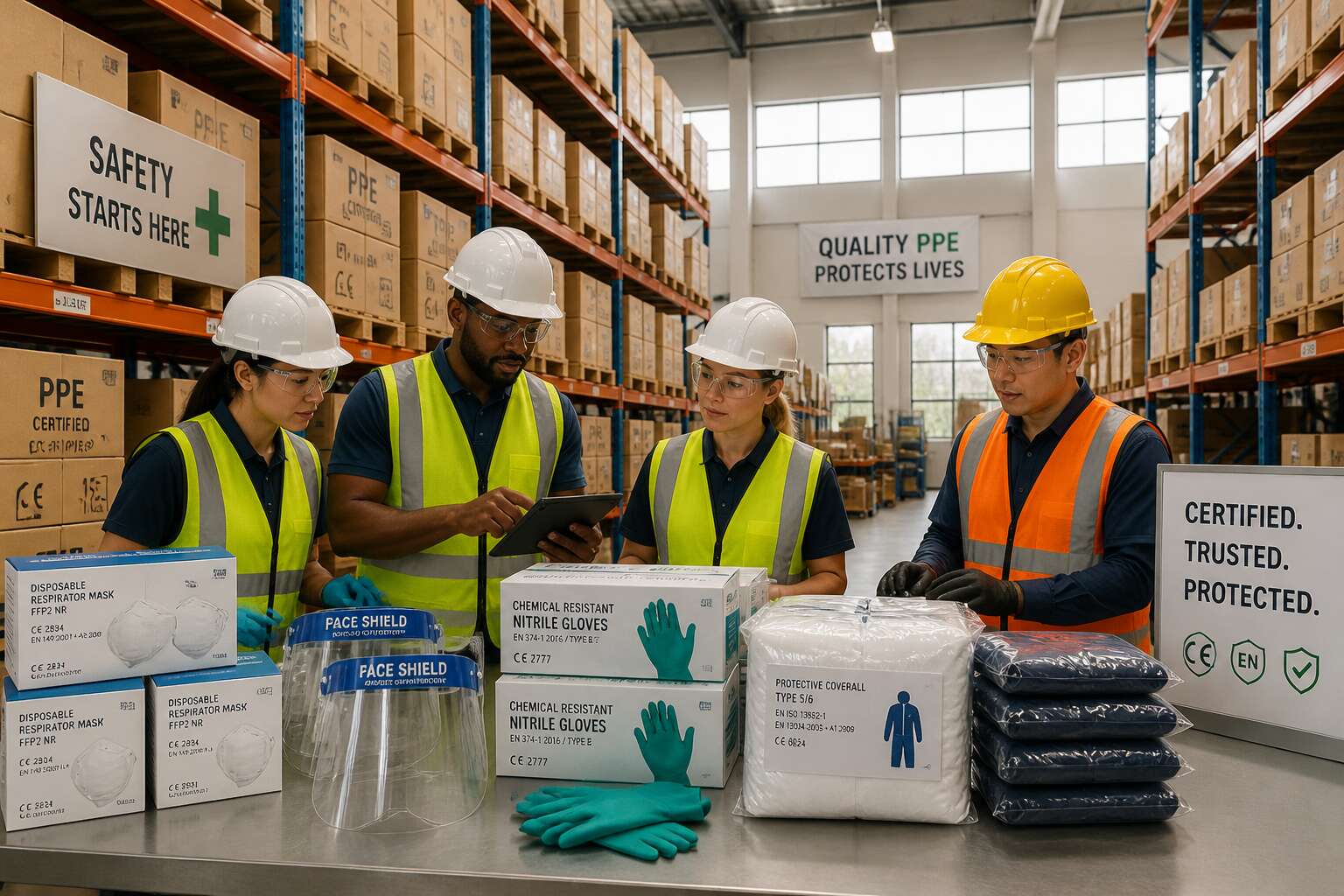
The Critical Role of Safety Gear Distributors in Workplace Protection
Why Reliable Personal Protective Equipment Vendors Matter
Behind every safe worksite stands a silent network of logistics, warehousing, and quality checks. In South Africa, where mining and construction dominate, a single counterfeit glove can unravel an entire safety program. Distributors act as gatekeepers, verifying that each batch meets SABS standards before it reaches the floor.
They handle unglamorous chores that keep businesses compliant. Reliable distributors do more than move boxes.
- Audit stock for expiry dates on cartridges
- Manage reorders for high-turnover items like gloves
- Coordinate delivery routes to remote sites
This is why ppe suppliers matter beyond their price tags. A vendor who vanishes after a sale leaves your team exposed, legally and physically. In the dust of the Highveld or the spray of the Cape coast, you need protection that performs under pressure. Trusting the right ppe suppliers means fewer surprises during audits and more confidence at shift start.
The Impact of Quality Safety Equipment on Compliance
Safety gear distributors perform a practical function that many site managers take for granted. They ensure that the ordered equipment matches the delivered equipment. This matters for compliance because an auditor checks specifications, not promises. Quality safety equipment, properly maintained, reduces the likelihood of violations. A distributor who rotates stock and checks expiry dates keeps the workforce protected and the paperwork in order.
In South Africa, compliance is tested daily. Reliable ppe suppliers understand local conditions and provide gear suited to the environment. Workers are more likely to wear equipment that fits and breathes. This raises compliance rates without extra training. The distributor’s attention to detail, from warehouse to delivery, shapes the safety culture on the ground. Trust in ppe suppliers becomes the foundation of every safe shift.
Major Categories of Protective Equipment Providers
Head-to-Toe Protection: Sourcing from Full-Line Distributors
A single missing hard hat can halt an entire site, yet many procurement teams still juggle multiple vendors for each body part. Full-line distributors exist to change that. They represent a distinct category of ppe suppliers who consolidate every layer of protection into one reliable inventory. Their stock typically spans:
- Head and face gear, from helmets to visors
- Respiratory equipment for dusty or toxic environments
- Hand and arm guards suited for various hazards
- Footwear with reinforced toes or puncture-resistant soles
This breadth simplifies sourcing. Instead of juggling niche catalogs, you gain a single point of accountability. These ppe suppliers maintain consistent sizing standards across teams and manage certification paperwork for each item, which reduces audit headaches. For South African operations, where remote sites demand fast turnaround, this approach cuts lead times and avoids backorder chaos. The right full-line distributor becomes an extension of your safety culture, not a stopgap measure.
Specialized Suppliers for Respiratory and Chemical Hazards
An estimated 30% of chemical exposures happen through the skin, yet many safety programmes only address breathing. Specialised ppe suppliers exist for this blind spot.
They stock respiratory and chemical protection with a precision that full-line catalogues cannot match. Think of self contained breathing apparatus, gas tight suits, and vapour analysing kits. Every item comes with technical documentation, including permeation curves and service life limits. These ppe suppliers often send industrial hygienists to your site for fit testing, a huge advantage for South African plants navigating strict regulations. Their expertise typically covers:
- Airline respirators for abrasive blasting
- Chemical cartridge filters with colour coding
- Emergency eyewash stations and drench showers
When hazards are invisible, the right specialist turns compliance into safety.
Construction and Industrial Safety Apparel Specialists
Construction and industrial safety apparel specialists occupy a crucial niche among ppe suppliers. They understand that a site worker’s most persistent hazard is often the environment itself: the highveld sun, the coastal humidity, the abrasive grit of a quarry. These providers source garments with a narrower focus, materials tested for South African conditions, not imported standards alone.
Their catalogues offer a distinct focus. The entries include:
- High visibility workwear with luminous tape tested against local dust loads
- Flame resistant overalls for electrical and welding operations
- Chaps and sleeves for chainsaw and forestry crews
The fitting process is where they excel. A boilersuit that bunches at the shoulders restricts reach. A vest that rides up exposes the spine. Apparel specialists measure workers individually, altering hems and closures. That precision transforms fabric into a functional barrier, a detail many ppe suppliers miss.
Medical-Grade Protective Gear Manufacturers
Medical-grade protective gear manufacturers are the germophobe’s best friends. They produce the shields that keep pathogens out and your reputation intact. These ppe suppliers focus on fluid resistance, viral filtration, and sterilisation, not comfort. A surgical gown that feels like a bin bag is a feature, not a bug.
- Isolation gowns with sealed seams
- N95 masks tested for fit rates
- Surgical gloves with puncture resistance
You won’t find high-vis tape here. You will find meticulous certification and a pricing structure that makes you reconsider your life choices. Medical gear demands precision, because a ppe supplier’s tiny flaw becomes your very large infection. In this arena, fashion is a distant rumour, and protection is the only headline.
Essential Criteria for Evaluating Industrial Safety Suppliers
Certifications and Compliance Standards to Verify
One expired certificate on a respirator cartridge can halt a fabrication plant in Gauteng for a week. Certification is the quiet contract between a worker’s body and the company that promised to protect it. When I evaluate ppe suppliers, I verify their SABS mark and ISO 9001 accreditation before I even open a product catalogue.
Compliance standards to verify in South Africa include:
- An SABS mark on each individual product, not merely on the company letterhead
- EN and SANS test results covering impact, penetration, and flame resistance
- Certificates of conformance that match the batch number on the delivered goods
These documents reveal whether a vendor carries the regulatory weight of what they sell. A supplier who hesitates to share test reports is hiding a fragility that no price discount can justify.
Assessing Product Quality and Durability Across Categories
Every hard hat in a Gauteng warehouse carries a hidden record of sun, sweat, and the occasional thrown spanner. The real test of ppe suppliers is whether their stock survives month three, not merely day one.
When I evaluate industrial safety vendors, I do boring things. I squeeze glove palms, flex boot soles, and drop polycarbonate visors onto concrete. Durability shows in the resin’s fineness and stitch density. Strong products from reliable vendors endure without visible cracking or seam separation.
- Gloves retain grip after repeated washing.
- Boots have toe caps that resist denting under load.
- Helmets keep their shell integrity after prolonged sun exposure.
Category differences matter. A leather welder’s apron needs different toughness than a hi-vis rain jacket. Both must handle the South African sun, but only one faces sparks. Matching material stress to real work environment is the core of assessing quality.
Lead Times and Inventory Management Capabilities
In South Africa, downtime on a site is measured in rands per minute. A delayed shipment of gloves or respirators stalls crews and inflates project costs. This is why evaluating ppe suppliers requires more than checking a catalogue. You need to understand their lead times and inventory management capabilities.
Ask how long it takes from order confirmation to dispatch. Ask what happens when a line item is out of stock. Do they backorder, substitute, or send partial shipments? Reliable ppe suppliers keep buffer stock on high-turnover items and maintain clear visibility into their own supply chain.
- Stock depth on core PPE lines
- Replenishment cycles with manufacturers
- Backup logistics for urgent site needs
A vendor that cannot answer these questions will struggle when you need emergency resupply.
Pricing Models and Bulk Discount Structures
Price per unit looks simple until you factor in logistics across South Africa. Transport costs, storage fees, and currency fluctuations all shift the real expense. Evaluating ppe suppliers means asking how they construct their pricing models. Do they offer volume tiers that actually reward bulk orders, or do they inflate the base rate to compensate?
Bulk discount structures come in three common forms:
- Flat percentage off for order values above a set threshold.
- Escalating discounts tied to annual purchase volumes.
- Free freight or extended payment terms as a soft discount.
Each one affects your bottom line differently. Flat percentages are easy to verify. Escalating tiers require honest tracking from the supplier. Soft discounts help cash flow, but they do not lower the unit price. In my experience, asking for a sample quote reveals the math behind each structure. These structures separate serious ppe suppliers from those just moving stock.
Customer Support and Technical Expertise
When a worker’s safety depends on the right equipment, the supplier’s support structure becomes as important as the gear itself. Customer support from ppe suppliers in South Africa often determines whether a safety programme holds or fails under pressure. Response times, replacement policies, and the willingness to answer uncomfortable questions all signal a supplier’s true commitment. In my experience, the reliable ppe suppliers treat support as a safety function rather than a sales department.
Technical expertise requires more than product knowledge. The best suppliers employ safety advisors who understand specific industrial hazards and can explain why one material outperforms another in your environment. They should offer:
- Hazard assessments tailored to your operational reality
- Clear guidance on product limitations and storage requirements
- Evidence based recommendations, not sales driven suggestions
A supplier who cannot articulate the technical reasoning behind a recommendation leaves you exposed, and that exposure compounds with every order.
Emerging Trends Shaping the Protective Equipment Industry
The Shift Toward Sustainable and Recyclable Safety Materials
A single safety helmet can take 400 years to break down, a fact that haunts every landfill in Gauteng. I’ve noticed ppe suppliers beginning to answer with materials that don’t outlive the workers who wear them!
The trend toward recyclable safety materials is gaining traction. For example, some suppliers now stock:
- Hard hats molded from recycled high density polyethylene
- Nitrile gloves infused with bio based fillers
- Aprons woven from post consumer PET fibres
These options still face hurdles. Recycled fabrics can suffer from reduced tear resistance, and many procurement managers worry about certification. However, the latest composites are narrowing the gap, and ppe suppliers in South Africa are actively piloting take back programmes. This movement is a calculated response to tightening environmental regulations and a younger workforce that genuinely cares about waste.
Integration of Smart Technology in Protective Gear
The integration of smart technology in protective gear converts passive equipment into active safety tools. Helmets with impact sensors now alert supervisors when a worker takes a hard knock. Vests embedded with proximity detectors warn forklift operators when someone enters their path. These features collect real time data that safety officers can use!
Some ppe suppliers in Johannesburg distribute gloves with haptic feedback, vibrating when a hand enters a danger zone. The devices are not replacements for training and inspections. They add another layer that catches what human attention misses.
Key trends include:
- Connected workwear that logs temperature and fatigue levels
- Smart respirators that track filter life and wear time
- Location beacons sewn into high visibility clothing
The technology is young, and standards are still catching up. For ppe suppliers taking on the risk of carrying these products, the payoff is a closer relationship with safety teams who value the data.
The Rise of Direct-to-Consumer Supply Chains
The shift toward direct-to-consumer models is reordering how safety equipment reaches the people who wear it. Historically, procurement flowed through layers of distributors, each adding time and cost. That structure served bulk buyers, but it left smaller operations with limited options. Now, manufacturers are testing shorter routes, selling directly to end users through digital storefronts. For ppe suppliers in South Africa, this creates a tension between protecting existing channels and exploring new ones. The demand is clear. A site manager ordering five hard hats does not want to wait three weeks for a quote. Direct access offers speed and transparency, but it also strips away the advisory role that good suppliers play.
The psychological shift matters as much as the logistical one. Buyers feel a sense of control when they browse a catalogue, compare specifications, and place an order without a sales call. That autonomy is appealing. Yet the risk is isolation. A worker who buys a respirator online without understanding cartridge compatibility may end up with equipment that fails under real conditions. Responsible ppe suppliers counter this by building self-service portals that still provide robust technical information, fitting guides, and regulatory references. They accept that the buyer wants independence, but they design the experience to protect the user’s safety, not just fulfill an order.
Some emerging patterns define this movement:
- Transparent pricing published openly, reducing the need for negotiation
- Direct shipping from factory to site, shortening lead times
- Subscription models for consumables like gloves and earplugs
- Digital fitting tools that reduce returns and mismatches
These developments force every ppe supplier to rethink their value proposition. If the product becomes a commodity, the relationship becomes the product. The supplier who offers guidance, rapid response, and accountability retains relevance. The one who merely moves boxes faces obsolescence. This is not a threat to the industry. It is a clarification of what genuine service means.
Overcoming Common Obstacles with Safety Equipment Partners
Navigating Supply Chain Disruptions
No amount of foresight can fully prepare you for the day your respirator shipment gets stuck at a customs checkpoint. South African businesses understand this reality. The difference lies in how quickly you recover with the right ppe suppliers.
Reliable partners preempt chaos through transparent communication. They share real-time stock levels and alternate freight routes before you ask. Some even maintain local buffer inventories to soften import delays.
What separates a helpful partner from a frustrating one?
- They offer local warehousing to reduce import dependence.
- They track every shipment milestone without prompting.
- They propose substitution products with equivalent certifications.
These ppe suppliers treat obstacles as routine conversation. They ask about your usage patterns and future projects, turning a potential breakdown into a coordinated response.
Managing Counterfeit Products and Quality Control Issues
Counterfeit safety gear is a quiet threat on South African sites. A fake respirator cartridge looks identical to the original, but it fails when it matters most. Trusted ppe suppliers in this market have systems to verify every batch before it reaches your warehouse.
They inspect factory documentation, run random testing, and trace each product to its source. Some even share lab results with clients before dispatch. A price 40% below market rate usually signals a problem. Reliable ppe suppliers will ask about your application and usage patterns, not simply push inventory out the door.
- Missing batch numbers or certificates of analysis
- Stock photos instead of actual product images
- Reluctance to confirm authorised distributor status
Quality control issues also appear as mislabelled gloves or expired filters. The right partner flags these problems before delivery, preventing a costly shutdown on your site.
Balancing Cost Constraints with Premium Protection
Budget pressure creates strange decisions on South African worksites. A safety manager may know the premium option lasts longer, yet the finance department sees only the upfront number. This tension pushes buyers toward the lowest quote, then penalises them when equipment fails mid-shift.
The task is not choosing one or the other. It is building a procurement strategy around actual usage data rather than price lists.
Reliable ppe suppliers price products using total cost of ownership, not shelf appeal. They demonstrate how a R50 glove lasting three shifts outperforms a R30 glove failing by lunch. The figures come from real site conditions, not manufacturer brochures.
When budgets tighten, ask your ppe suppliers these questions:
- Which products show the lowest failure rate in your industry?
- What is the realistic lifespan under South African conditions?
- Where can specifications downgrade without breaching compliance?
The answers separate transactional vendors from genuine partners. The right relationship protects both your budget and your workforce.
Ensuring Consistent Stock Availability Across Locations
A single out-of-stock safety helmet can idle a forty person crew for an afternoon. Consistent stock availability across locations forms the quiet foundation of any safety programme. A ppe suppliers relationship only matters when your Durban depot needs fifty gloves while your Johannesburg warehouse requests the same item before lunch. Stock shortages happen. The question is whether your partner reacts like a logistics provider or someone who just discovered the storeroom.
South African operations rarely carry identical inventory across branches. Seasonal demand, regional hazards and varying project phases change consumption patterns. Reliable ppe suppliers keep regional buffers aligned with actual usage data. They forecast demand from site feedback, not guesswork. This approach reduces emergency courier fees and last minute substitutions that compromise worker safety.
Coordinating Training and User Adoption
Coordinating training across distant sites is rarely effortless. Each crew carries its own habits, and a new glove or harness often meets quiet resistance. Our ppe suppliers address this by aligning onboarding sessions with our shift patterns, not their sales calendar. They bring samples, let workers test comfort, and answer questions in isiZulu or Afrikaans when needed.
User adoption stalls when safety gear feels unfamiliar. One common obstacle is inconsistent sizing across brands, another is maintenance confusion.
- Sizing variances that make a large visor fit like a medium
- Instructions that ignore local cleaning practices
These issues disappear when suppliers train onsite supervisors to become internal champions. Practical handling beats a glossy manual every time.
Addressing Regulatory Changes in Real Time
South Africa’s regulatory landscape moves without warning. A visor approved under the old SANS standard becomes useless the moment the new one publishes. Our ppe suppliers track these shifts daily, not quarterly. They flag changes before inspectors arrive.
Common obstacles appear when partners react instead of anticipate:
- Stock that fails updated compliance checks, forcing last-minute replacements
- Documentation gaps that hold up site audits
- Local content requirements that catch foreign brands unprepared
Real time response means the supplier’s warehouse changes with the latest gazette. No grace period surprises, no gear sitting idle while paperwork catches up.

0 Comments