
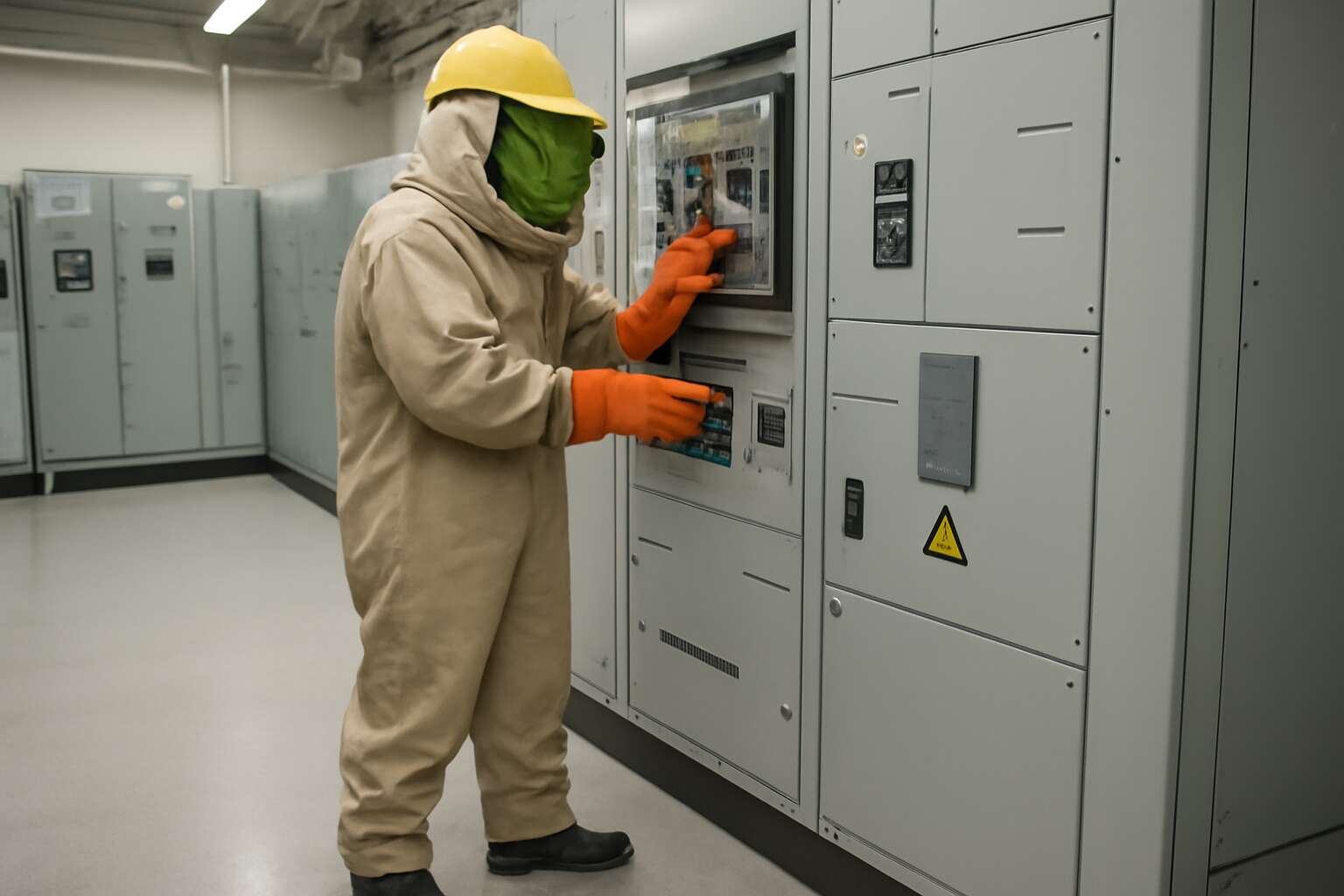
NFPA 70E PPE Table Essentials
What the NFPA 70E PPE Table Covers and Why It Matters – Overview of scope, arc flash protection framework, and how the table guides PPE selection.
Power is a social contract, and in South Africa’s bustling workshops a single spark can rewrite a day. “Safety is not a gadget; it’s a mindset,” a seasoned safety lead often says. The nfpa 70e ppe table distills that mindset into a practical map: it defines scope, anchors the arc flash protection framework, and shows how PPE choices align with risk, the task, and energy levels.
- Scope and boundaries of electrical exposure
- Arc flash energy estimates that guide protection levels
- PPE category mappings to tasks and voltage ranges
This framework matters on the shop floor because it translates dense standards into meaningful protection, guiding PPE selection with clarity and conscience. When teams read it in context, safety becomes a shared habit rather than a checkbox, weaving people into the fabric of the plant.
Key Elements of the PPE Categories in the Table – Breakdown of clothing, head and face protection, eye protection, and insulating gear used in the table.
In a South African workshop, a spark can rewrite a day. The nfpa 70e ppe table translates arc energy into a practical map, turning risk into readable protection and giving teams a common language on the shop floor.
Key elements of the PPE categories in the table include clothing, head and face protection, eye protection, and insulating gear—each chosen with energy and task in mind.
- Clothing: arc-rated fabrics for coveralls, jackets, and pants that balance protection with mobility.
- Head and face: hard hat with a shield or visor to deflect arc energy.
- Eye protection: arc-rated safety glasses or goggles with side shields for full coverage.
- Insulating gear: rubber insulating gloves with leather protectors, insulating sleeves, and insulating mats for safe handling of live components.
When teams consult the nfpa 70e ppe table, these layers align with task and energy, weaving safety into the plant’s daily fabric.
How to Read Arc Flash Labels Alongside the PPE Table – How incident energy, boundary, and PPE levels interact with the table.
Arc energy isn’t a rumor; it translates into a reading on the shop floor. The nfpa 70e ppe table acts as a translator, turning spark energy into a practical map that guides teams in SA plants, where daily routines meet high-stakes safety.
Arc flash labels pair with the table to show three threads: incident energy, arc boundary, and PPE category. They co-author the risk story and help crews gauge what distance and protection are needed.
- Incident energy (cal/cm^2)
- Arc flash boundary (distance)
- PPE category
Reading labels becomes almost second nature when the table and labels converse in the same language—protecting hands, eyes, and nerves as efficiently as possible on the plant floor. It’s a quiet, indispensable chorus on the plant floor!
Common Terminology and Definitions You Should Know – Terms like PPE levels, incident energy, arc flash boundary, and voltage categories.
Factories chase uptime, not drama. Arc energy on the shop floor translates to risk, downtime, and costs—unless your labels and the nfpa 70e ppe table speak the same language. “Safety is the most cost-effective efficiency tool,” a seasoned SA safety officer likes to say, and this terminology map makes spark energy actionable on the line.
Common terminology you should know includes PPE levels, incident energy, arc flash boundary, and voltage categories. The nfpa 70e ppe table uses these concepts to pair protection with exposure.
- PPE levels: protective gear classes matched to risk
- incident energy: arc heat, cal/cm^2
- arc flash boundary: safe-distance zone
- voltage categories: risk bands by electrical potential
Mastery of these terms makes the nfpa 70e ppe table a ready-reference on SA floors.
Interpreting the NFPA 70E PPE Table for Workplace Safety
Understanding Incident Energy Levels and PPE Levels – Link between measured energy and required PPE categories.
Arc-safe decisions start with what you see on the data sheet. A safety director once quipped, “energy is the boss—dress for it.” Interpreting the nfpa 70e ppe table helps translate measured incident energy into the PPE category you need for a task.
- Assess the actual incident energy at the task boundary
- Match that energy to the corresponding PPE category
- Cross-check with the established boundaries and procedures
The table acts as a bridge between the numbers you measure on site and the gear you wear. It makes energy concrete, guiding decisions about protection and readiness without guesswork.
In South Africa, clear interpretation of energy to PPE supports safe work culture, ensuring teams talk the same language when talking PPE levels and protective boundaries.
Selecting PPE Based on Voltage and Task – Guidance for choosing PPE by task type, voltage class, and working distance.
Arc-energy myths crumble when the PPE table is consulted—the ledger translating measured incident energy into real protection. Interpreting this table for workplace safety means aligning task type, voltage class, and working distance with the armor you wear before the first arc spark.
Guidance for PPE by task type, voltage class, and working distance: the nfpa 70e ppe table translates measured energy into PPE categories you can wear on site.
- Task type shapes the protection level, from routine checks to more complex interventions
- Voltage class anchors PPE to the equipment’s energy landscape
- Working distance modulates exposure; proximity increases the importance of insulating gear and face protection
In South Africa, these interpretations foster a shared language across sites, building safe work cultures where energy is read and respected, not feared.
Common Misreads and How to Avoid Them – Pitfalls such as misreading labels, mixing PPE levels, or underestimating hazards.
Arc-flash caution isn’t a vibe; it’s a measurement. The nfpa 70e ppe table translates energy into protection, but misreads are common: a label can look straightforward while the actual boundary shifts with task nuance, voltage class, and distance. Taken at face value, the table can mislead rather than guide a crew through their daily arc-flash dance.
- Misreading labels or incident energy numbers
- Mixing PPE levels across categories
- Underestimating how hazards evolve with proximity and task complexity
Across South Africa’s varied sites, spotting these misreads keeps the workplace language precise, turning energy from a fearsome myth into a codified reality the team can respect.
Practical Scenarios and Examples by Task Type – Real-world examples such as maintenance, troubleshooting, and testing scenarios.
Arc energy is more than a vibe—it’s a measurable reality that stops crews in their tracks. “PPE tables save lives,” a veteran safety officer likes to remind us. Across South Africa’s dynamic sites, interpreting the nfpa 70e ppe table becomes daily arithmetic between task, distance, and energy.
Consider these practical scenarios by task type:
- Maintenance on a live 400V panel, where energy boundaries shift with task nuance
- Troubleshooting a fault in a 3-phase switchgear, where incident energy evolves as you approach
- Testing equipment in a controlled loop, where measured energy informs PPE choices
In practice, nfpa 70e ppe table translates incident energy and task context into clear PPE requirements, helping teams in South Africa stay protected on the job.
Compliance, Training, and Auditing Related to the NFPA 70E PPE Table
Regulatory Requirements and OSHA Alignment – Overview of standards alignment and mandatory compliance.
Nearly every arc flash incident traces back to gaps in training, auditing, or PPE selection. Compliance isn’t theoretical—it’s the real shield workers rely on on the shop floor and in the switchyard here in South Africa.
Compliance means meeting NFPA 70E standards and OSHA alignment. The nfpa 70e ppe table acts as a regulatory compass, translating incident energy into PPE categories and required controls.
Training is ongoing and practical. Our approach blends classroom concepts with hands-on practice, ensuring teams know PPE levels, read labels, and apply the table to real tasks.
- Hands-on PPE inspection and proper donning/doffing
- Understanding incident energy and PPE levels
- Recordkeeping and competency verification
Auditing keeps the system alive. Regular internal checks, third-party verifications, and corrective actions close the loop between policy and performance.
Documentation, Records, and Audit Readiness – What to record, where to store, and how to prepare for audits.
‘If it’s not written, it’s not compliant,’ a South African safety officer reminds us. On the shop floor, PPE decisions hinge on a solid paper trail. Documentation isn’t busywork—it’s the shield that keeps teams safe and audits satisfied.
- Task, date, and PPE level used
- Incident energy estimates or boundary references
- Inspection, testing, and donning/doffing verification
- Training dates and competency checks
- Corrective actions and follow-up dates
These entries align with the nfpa 70e ppe table.
Store records in a centralized, access-controlled system—digital log, cloud backup, and clear retention rules (minimum five years in SA facilities). Version history and audit trails make it easy to prove changes over time.
For audits, keep a pre-audit checklist, assign a records custodian, and run regular internal verifications so the file is always audit-ready.
Worker Training Programs on PPE Table Usage – Core curriculum, refresher training, and competency checks.
Compliance on the shop floor isn’t smoke and mirrors—it’s documentation that saves lives! The nfpa 70e ppe table anchors how teams prove they understand incident energy, PPE levels, and arc flash boundaries. In South Africa, SA facilities turn that table into real safety culture, with records that hold up under audits.
Training grows that culture. The core curriculum for PPE table usage covers risk assessment, PPE selection, and the lifecycle of protection—inspection, maintenance, and correct donning and doffing. Refresher training sharpens lessons, while competency checks confirm workers apply theory to field tasks.
Auditing follows the trail—the records, sign-offs, and change histories that prove training aligns with the table’s requirements. An audit-ready portfolio in a centralized system makes investigations smoother and reinforces safety commitment in South Africa’s industrial landscape.
Certification and Competency for Electrical Personnel – Credentials, assessment methods, and ongoing verification.
Compliance on the shop floor isn’t smoke and mirrors—it’s stamps, ledgers, and real records. For electrical teams, the nfpa 70e ppe table anchors every job by tying incident energy, PPE levels, and arc flash boundaries to field tasks. Credentials, certification records, and competency attestations prove workers meet the table’s demands.
Training builds the culture: core curriculum, refresher courses, and competency checks rely on solid assessment methods—from hands-on demonstrations to scenario-based quizzes. The framework centers on Credentials, assessment methods, and ongoing verification to ensure people aren’t just trained but genuinely verified in practice.
Auditing ties it all together with traceable records, audit trails, and change histories. In South Africa’s industrial landscape, an audit-ready portfolio in a centralized system speeds investigations and reinforces safety culture, using nfpa 70e ppe table as the audit anchor that demonstrates ongoing alignment and competency.
Implementation and Maintenance of PPE Based on the NFPA 70E PPE Table
Creating a PPE Selection Workflow and Roles – Defined process, responsibilities, and approval steps.
Studies show robust PPE programs can reduce exposure incidents by up to 40% in South Africa. The nfpa 70e ppe table serves as the compass for this discipline, translating voltages and tasks into concrete protection levels. In practice, it’s about making the right PPE and process second nature.
To translate that table into daily safety, establish a clear PPE selection workflow with defined responsibilities and an approval path:
- Safety Manager: approves PPE strategy and audits compliance.
- Electrical Supervisor: confirms task specifics, voltage class, and boundaries.
- Line Technician: identifies equipment, tasks, and PPE needs.
- Procurement: ensures correct PPE types, sizes, and inventory.
- Quality/Compliance Officer: records and coordinates audits.
Maintenance of PPE is ongoing: schedule inspections after use or at intervals, retire damaged gear, and re-train workers on labeling and incident-energy reading. Tie maintenance to the PPE table by linking data to refresh cycles and ensuring renewals are approved before tasks restart.
Sourcing, Evaluation, and Supplier Considerations – How to assess PPE quality, material specs, and compatibility.
Implementation and maintenance of PPE, anchored to the nfpa 70e ppe table, hinges on disciplined sourcing, rigorous evaluation, and supplier accountability. In SA workplaces—from mining to manufacturing—the right gear must meet real-world demands: tested insulation, reliable arc protection, and compatibility with other PPE layers. Quality data, certs, and traceability underpin confidence that every glove, hood, and suit behaves as intended under incident-energy exposure.
When aligning with the table, focus on how quality is demonstrated, how materials perform under SA field conditions, and how suppliers support ongoing maintenance.
- Quality indicators: third-party certifications, batch traceability, and documented performance tests.
- Material specs: dielectric strength, arc rating, abrasion resistance, and comfort-fit design.
- Compatibility: seamless integration with gloves, visors, hoods, and other PPE layers for SA field conditions.
- Supplier considerations: repeatable lead times, warranties, after-sales support, and robust recall processes.
Inspection, Maintenance, and Replacement Schedules – Routine inspection, testing, and when to retire equipment.
SA workplaces keep you on your toes, where arc flash threats collide with dust and heat. Implementing PPE programs anchored to the nfpa 70e ppe table eliminates guesswork—routine inspection, testing, and retirement decisions become matters of policy, not mood. Gear must endure sun and sweat while staying traceable; when it fails, confidence falters in the blink of an arc!
Maintenance hinges on SA-friendly procurement and clear warranties. The plan should include ongoing visual checks, tag verification, and documented replacement criteria aligned with table expectations.
- Routine inspection and testing cadence
- Retirement criteria based on wear and performance
- Documentation and traceability
Documenting Your PPE Program and Keeping It Up to Date – Policy documents, version control, and change management.
Across South Africa’s plants, implementation is a disciplined craft. A PPE program anchored to the nfpa 70e ppe table turns arc‑flash risk into policy, woven into policy documents that spell out roles and review cadence. This clarity keeps safety steady when conditions shift.
Maintenance hinges on policy governance and thoughtful change management. A central document bears a revision number, a concise change log, and archived editions, preventing drift. When updates arrive—new incident‑energy figures, revised PPE requirements, or regulatory alignment—they ripple through approvals and distribution, sustaining integrity within the standard framework.
- Policy documents define purpose, scope, governance, and PPE retirement criteria.
- Version control centers a single repository with revision IDs and logs.
- Change management ensures formal approvals and clear stakeholder communication.
These elements keep the PPE program current and auditable as South Africa’s industrial landscape evolves.

0 Comments