

Physical Protection and Injury Prevention
Head and Skull Safety
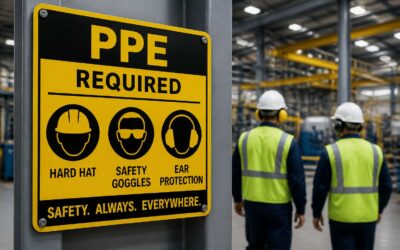
Construction and mining in South Africa account for thousands of head injuries every year. A single tool falling from a third floor can fracture a skull. Hard hats absorb that direct force and spread it across a wider surface. This is the first of the 5 advantages of wearing ppe at work: physical protection that reduces the severity of impact.
I have stood on scaffolding where a dropped wrench dented a steel bucket. The worker beside me said the helmet saved his scalp. Skull fractures happen in seconds. Head protection does not make anyone invincible. It changes a fatal injury into a recoverable one.
Eye and Face Defense
Each year, thousands of South African workers face permanent disability from preventable eye injuries. The human eye is a fragile organ, and a single airborne particle can alter a life trajectory. Physical protection in this context means understanding that your vision is irreplaceable. When you engage with the 5 advantages of wearing ppe at work, you acknowledge that your face and eyes deserve a barrier against the unpredictable nature of industrial environments.
Eye and face defense requires more than a simple pair of glasses. It demands a commitment to wearing equipment that withstands specific threats:
- Impact resistance against flying debris and metal shards
- Chemical splash protection for handling corrosive substances
- Optical clarity to maintain spatial awareness and depth perception
I have witnessed a grinder disc shatter at full speed. The operator closed his eyes just in time, but his cheeks bore the scars for weeks. That moment revealed how thin the line is between sight and blindness. Face shields and safety goggles are not bureaucratic requirements. They are the last line of defense between your senses and the harsh physics of a worksite. The cost of protection is negligible compared to the price of a single surgical procedure or the lifelong adjustment to partial sight. This advantage is not abstract. It is a daily choice that preserves your ability to see your children grow up, to read a contract, to navigate the world without assistance.
Hand and Arm Guarding
On a construction site outside Durban, I watched a labourer catch his fall by grabbing a wire rope. The grip saved his body but shredded his leather gloves. That moment showed me why the 5 advantages of wearing ppe at work matter: proper hand and arm guarding turns a near catastrophe into a minor scare.
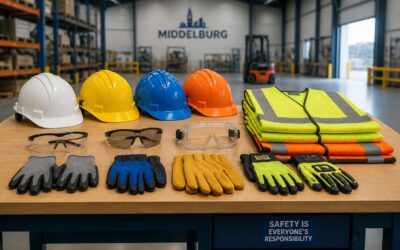
Hands manage every load and every tool. Yet workers often treat them as expendable. Cut-resistant sleeves, gauntlets, and impact gloves guard against lacerations, punctures,and crush injuries. Choosing the right material protects tendons, nerves,and your ability to earn a living.
- Choose gloves rated for contact heat and abrasive tasks.
- Check for wear before every shift.
Arm guards matter too. A misplaced angle grinder can open a forearm in seconds. Kevlar and coated fabrics absorb sharp impacts and cuts. Invest in these barriers for your family’s sake.
Foot and Leg Protection
A pallet load of bricks slipped near a worker in Johannesburg. The steel toe cap took the impact and saved his foot from amputation. I saw the cracked cap afterwards. It delivered exactly the kind of physical protection and injury prevention that foot and leg guards are designed for.
Legs matter as much as feet. Falling objects, stray scaffolding, and concrete formwork slam into shins and knees. Metatarsal guards and reinforced gumboots handle these blows. They spread the force across a wider area. Proper fit is non-negotiable!
This is one of the 5 advantages of wearing ppe at work. Protecting the lower body means a worker stays mobile and productive. A broken foot costs weeks of wages. A good pair of boots costs a fraction of that.
Health and Environmental Hazard Control
Chemical and Biological Shield
Industrial chemicals and biological agents do not advertise their presence. You can walk into a seemingly clean room and inhale a solvent vapor that slowly damages your kidneys. A worker in Gauteng once described it as fighting an invisible enemy, and that is exactly what it is. This is where the 5 advantages of wearing ppe at work become a matter of survival, not compliance.
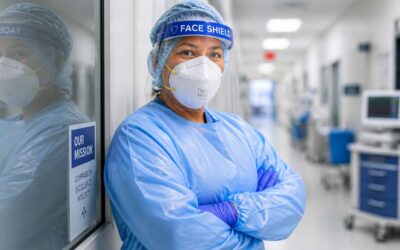
The chemical and biological shield your PPE provides is absolute. A nitrile glove that resists permeation, or a respirator fitted with the correct cartridge, stops exposure at the source. We often cannot smell, see, or feel these hazards until it is too late.
– Polycarbonate visors deflect biological splashes
– Chemical suits prevent dermal absorption
– Respirators filter aerosolized particles
Each barrier addresses a different route of entry. That is the point of wearing a full ensemble rather than picking and choosing.
Respiratory Air Filtration
The air itself is the hardest hazard to see. This is where the 5 advantages of wearing ppe at work become a matter of daily survival. A typical factory floor in Gauteng fills your lungs with concrete dust, crystalline silica, metal fumes, and microscopic mould spores. Some particles irritate immediately. Others settle into deep lung tissue for years before symptoms surface.
A respirator fitted with the correct filters does its job in silence. It prevents toxic compounds from reaching your bloodstream. I have watched workers pull off their mask for a five minute task, never grasping the danger. Consider what passes through an inadequate mask:
- Welding smoke saturated with heavy metals
- Asbestos fibres from ageing building materials
- Silica dust generated by cutting or grinding
Every particle blocked from your alveoli is one less burden on your immune system.
Noise-Induced Hearing Loss Prevention
Silence is a luxury most factory workers never experience. The relentless grind of industrial machinery, the percussive slam of presses, and the high pitched whine of cutting tools all contribute to a daily auditory assault. This constant exposure does not just make communication difficult; it physically damages the delicate hair cells within the inner ear. Once these cells are destroyed, they never regenerate, leading to permanent and irreversible hearing loss. This is a primary health and environmental hazard that demands rigorous control.
Prioritising hearing protection is a critical component of the 5 advantages of wearing ppe at work. Effective control begins with identifying the noise sources, but engineering solutions often fail to reduce decibel levels to a safe range. This is where personal protective equipment becomes the final barrier between a worker’s long term health and a lifetime of silence. Wearing properly rated earmuffs or earplugs does not just muffle sound; it attenuates the dangerous frequencies that cause the most damage. The protection allows workers to leave the factory floor with their auditory faculties intact, preserving their ability to enjoy conversations and music long after retirement.
Investing in this form of PPE is an investment in cognitive health. Untreated noise exposure is linked to increased stress, hypertension, and even cognitive decline. The process of protection is straightforward:
1. Assess the noise levels in the specific work area.
2. Select hearing protection with the correct Noise Reduction Rating (NRR).
3. Ensure a proper fit to create an effective acoustic seal.
4. Replace worn or compromised equipment regularly.
This proactive approach ensures that the workforce remains productive and alert, free from the isolating effects of noise induced hearing loss. It is a silent advantage that secures a worker’s quality of life, proving that the 5 advantages of wearing ppe at work extend far beyond the immediate physical barriers they provide.
Thermal and Burn Protection
Molten metal in South African foundries pours at temperatures exceeding 1,400 degrees Celsius. A stray splash can sear through standard fabric in seconds. Welding arcs, furnace operation, and smelting work all expose employees to this extreme heat. Thermal PPE provides the critical barrier between skin and severe burn injury.
Flame resistant coveralls, leather aprons, and heat proof gloves are purpose built for specific thermal risks. These materials reflect radiant energy, repel molten splatter, and resist ignition on contact. The right equipment also guards against steam burns in humid process areas. This is one of the 5 advantages of wearing ppe at work: workers remain safe from thermal hazards that plain clothing cannot withstand.
Conduct a risk assessment for heat exposure:
- Map all radiant heat sources and open flame zones
- Check molten metal splash paths during casting and pouring
- Match PPE ratings to the maximum expected temperature
- Replace any gear showing charring, cracks, or melted fibre
With proper thermal protection, burn injuries drop and worker confidence rises.
Dust and Particle Containment
The air inside a gold mine reduction plant carries a fine silicate dust that clings to every surface. Exposure goes beyond inhalation; these particles settle into machinery and worker clothing alike, creating a secondary hazard.
Wearing disposable overalls, head caps, and rubber overshoes contains the material at the source. This is the essence of dust and particle containment. It prevents the migration of hazardous powders from one section of the facility to another, a critical factor in any plant handling cement, grain, or pharmaceutical ingredients. Properly selected coveralls with storm cuffs and taped seams keep the contaminant away from street clothes, while a simple boot wash station stops residue from tracking into break rooms. Containment is a silent investment in workplace health.
This principle is one of the 5 advantages of wearing ppe at work, because it limits the spread of invisible pollution to the entire team.
Regulatory Compliance and Workplace Accountability
Meeting Occupational Safety Standards
South Africa’s Occupational Health and Safety Act places clear duties on employers. Compliance is not a matter of choice when risk assessments demand protection. Failure to provide adequate PPE can result in substantial fines and legal consequences. Many companies now recognise the 5 advantages of wearing ppe at work, with regulatory standing at the top.
Workplace accountability grows when every worker understands their responsibilities. Supervisors model correct behaviour and address violations immediately. A dependable compliance framework relies on several components:
- Audits that verify ongoing conformity
- Incident reports that identify root causes
- Training records that demonstrate competence
- Clear communication channels for hazard reporting
These elements are essential for meeting occupational safety standards. When accountability becomes embedded in daily routines, compliance becomes part of the broader work culture. Workers notice when leadership treats safety seriously, and this observation shapes their own conduct.
Avoiding Penalties and Fines
The Department of Employment and Labour will not accept a shrug as documentation. One missing signature on a glove issue sheet can unravel a thousand claims of diligence. This is where the 5 advantages of wearing ppe at work become something you can quantify. Avoiding penalties and fines starts with anticipating the questions every auditor asks:
- Can you produce a certificate for that lanyard’s inspection?
- Who signed off on last month’s fire drill training?
- Why is that grinder disc missing its guard?
An accountable workplace answers these without hesitation. Compliance must be part of the routine, not a performance for visitors. Workers who see managers inspect their own gear understand the standard. No worker will treat a chin strap seriously if the plant manager does not. The employer who does this rarely meets a punitive fine.
Demonstrating Duty of Care
South Africa’s Occupational Health and Safety Act reverses the burden of proof. When a worker is injured, the employer must demonstrate diligence, not the worker negligence. This is where the 5 advantages of wearing ppe at work transform from theory into a written record of care.
Every signed issue sheet, every inspection date on a lanyard, every training roll call becomes evidence of accountability. Managers who wear their own gear on the floor set a standard that no policy document can match. A plant manager who clips on a fall arrest harness before walking the line tells workers the rules apply to everyone. That consistency builds a culture where safety is reflexive, not enforced.
Operational Efficiency and Workforce Productivity
Reducing Accident-Related Downtime
Every avoidable injury creates a measurable loss in productivity. When a worker goes down, the entire line feels it. Equipment stops. Colleagues lose focus. Schedules slip. Proper PPE prevents the incident before it ever happens.
Consider what a serious accident costs:
- Immediate shutdown of the affected area
- Time spent on incident reporting and investigation
- Overtime for other staff to cover the gap
Wearing effective protection keeps people in their posts and operations moving. That is one of the 5 advantages of wearing ppe at work that directly improves operational efficiency. Fewer disruptions mean faster completion times and more reliable output.
Boosting Employee Confidence and Morale
Operational efficiency improves when workers trust their safety gear. A miner in Rustenburg who pulls on his chinstrap and shin guards moves with certainty, not hesitation. That certainty translates into fewer stops and smoother workflows! The 5 advantages of wearing ppe at work include this steady rhythm, because anxious workers make costly errors. A welder who checks his visor before each bead produces cleaner joints. A chemical plant operator with proper gloves handles drums faster. This is productivity without shortcuts.
Boosting employee confidence and morale happens quietly. Wearing effective protection says the company values the person inside the uniform. That message builds loyalty and reduces turnover. Workers who feel protected stay alert and engaged. They raise concerns earlier. They train newcomers with pride. Confidence grows in the air of safety, and morale follows naturally.
Minimizing Absenteeism from Injuries
Operational efficiency and workforce productivity depend on trained bodies staying present. A single preventable injury removes an experienced worker from the floor for days, sometimes weeks. The 5 advantages of wearing ppe at work include this practical outcome: fewer injuries mean fewer empty stations and steadier output.
Absenteeism from injuries creates disruption. Supervisors reassign tasks, and remaining workers absorb unfamiliar duties. Quality dips while everyone adjusts.
- Slip-resistant footwear prevents ankle sprains and back strains.
- Cut-resistant gloves stop lacerations that require stitches and recovery time.
- Proper helmets reduce concussion risks from falling objects.
Each piece of equipment keeps skilled hands active and production targets within reach.
Streamlining Safety Training and Protocols
Efficiency thrives on predictability. Streamlining safety training means stripping away generic slides and focusing on actual workplace conditions. Team members who can recite the 5 advantages of wearing ppe at work still need practice with buckles, seals, and straps. We see it every shift. A short daily protocol beats a thick manual gathering dust.
- Assign each worker a named storage bay.
- Require a 90 second gear check at shift start.
- Log every repair request immediately.
These three steps cut confusion. Supervisors spot problems before they stop production. Workers spend less energy recalling procedures and more energy doing their jobs. The 5 advantages of wearing ppe at work only matter when people apply them under pressure. Regular micro drills make that application automatic. Output climbs because safety becomes muscle memory, not a distraction.
Enhancing Team Communication on Hazard Identification
Team communication sharpens when everyone works from the same reference points. A worker who sees a colleague without a respirator in a dusty zone knows immediately to flag it. That instant recognition, fueled by the 5 advantages of wearing ppe at work, shortens the distance between spotting a risk and reporting it.
Hazard identification becomes a collective act, not a supervisor’s solo duty. We see this every day during shift handovers:
- Workers point out loose straps or cracked visors as they pass each other.
- Teams share near miss details in daily huddles without waiting for formal reviews.
- Maintenance requests get filed on the spot, cutting response times by hours.
This flow of observations means small issues never become stoppages. Efficiency climbs because every pair of eyes contributes to the safety picture. The 5 advantages of wearing ppe at work transform from a checklist into a common language that keeps production moving.
Improving Quality of Work Outcomes
Productivity climbs when workers stay engaged. Properly fitted PPE does not hinder movement; it removes the stop-start rhythm caused by preventable exposures. A crew member who remains comfortable while handling materials sustains focus for longer stretches. The result appears in the finished product. Workpieces come out cleaner, measurements stay accurate, and rework numbers drop.
On a South African site, when the foreman does not pause operations because of dust irritation or a slippery glove, the team maintains momentum. That steady pace produces predictable output. The 5 advantages of wearing ppe at work include this consistency, where gear becomes a productivity tool rather than a compliance burden.
Routine checks for wear become part of the workflow. This prevents mid-task failures.
– Replace compromised equipment immediately
– Inspect straps and seals before each use
– Store PPE away from grime
These actions keep workers in motion. Waste drops. Quality holds. Across the shift, the 5 advantages of wearing ppe at work show up in measurable output and fewer callbacks, making every hour more productive.
Financial Savings and Long-Term Sustainability
Lower Medical and Compensation Expenses
One grim ledger sheet can erase a decade of profit. The financial haemorrhage from a workplace injury extends far beyond the immediate medical bill, spiralling into insurance premiums, legal retainers, and the quiet drain of hiring temporary replacements. When a worker dons the correct protective gear, they are not merely shielding their body; they are actively fortifying the company’s balance sheet against sudden, devastating shocks.
The true economic advantage of a robust PPE programme reveals itself over years, not months. Lower medical and compensation expenses become apparent as injury frequency plummets, which in turn stabilises your risk profile. This stability is a valuable asset, as it directly influences the annual cost of your coverage.
– Reduced claim frequency lowers the employer’s experience modification rating.
– Fewer incidents mean less overtime paid to cover absent staff.
– Decreased need for emergency equipment repair and replacement.
– Lower legal consultation fees regarding labour disputes.
This fiscal prudence transforms safety from a mere compliance cost into a strategic investment. Every incident that is avoided is capital preserved for growth and innovation, ensuring the venture remains solvent and competitive. The financial legacy of a safe operation is a future unburdened by the haunting spectre of avoidable liability. This is the unspoken promise of the 5 advantages of wearing ppe at work.
Extended Equipment and Tool Lifespan
Every scratched lens or clogged valve carries a replacement cost. Wearing the correct PPE, from sealed goggles to reinforced gloves, keeps abrasive dust and chemical splashes off your working tools. This preservation directly contributes to the 5 advantages of wearing ppe at work, as extending tool lifespan reduces unplanned purchasing. The effect is compounded across many workstations:
- Dust masks prevent fine particles from settling into moving parts.
- Chemical-resistant gloves stop corrosive spills from degrading hand tools.
- Safety boots shield pedals and lever mechanisms from impact damage.
Each piece of equipment that avoids premature failure keeps your capital tied to production. Long-term sustainability emerges from routine protection, turning a simple policy into an economic advantage. The fewer machines you replace, the more resources remain for growth.
Reduced Insurance Premiums
Financial savings go beyond direct costs. A documented safety record directly influences your risk profile. Insurers calculate premiums based on claims history, and frequent injuries signal higher risk. This is one of the 5 advantages of wearing ppe at work that touches your bottom line.
When workers consistently wear proper gear, incidents drop. Fewer incidents mean fewer claims. Over time, this translates into lower premiums. The savings compound annually, freeing capital for other needs.
For South African businesses, this matters more. Mining and construction carry high inherent risk. Demonstrating a commitment to PPE shows insurers you manage hazards effectively.
- Reduced claim frequency improves your experience modification rating.
- A strong safety culture strengthens contract bids.
- Predictable risk attracts better coverage terms.
Each year without a major incident builds trust with your underwriter. That trust becomes a tangible asset.
Positive Company Reputation and Client Trust
The real value of the 5 advantages of wearing PPE at work extends beyond the factory floor. Financial savings materialise through stable production schedules and fewer disruptions. When protective gear prevents harm, operations remain fluid. This consistency creates a predictable cash flow, allowing for smarter capital allocation. Long-term sustainability, then, is not an abstract goal. It is a direct result of avoiding the messy, expensive aftermath of workplace incidents. A business that plans for safety plans for survival.
Reputation is a quieter asset. Clients in South Africa’s competitive market observe how you treat your people. A spotless safety record signals reliability. It suggests your management team values precision over shortcuts. This perception opens doors. Tenders become easier to win when your compliance history speaks plainly.
Consider the ripple effect:
- Prospective clients ask about safety culture before pricing.
- Joint ventures favour partners with proven occupation health records.
- Public trust in your brand increases with every reportable injury-free quarter.
These elements do not appear on a balance sheet, yet they decide who secures the next contract. The 5 advantages of wearing ppe at work therefore include soft power that hard cash cannot buy.
0 Comments