
Primary Federal Agencies
Occupational Safety and Health Administration
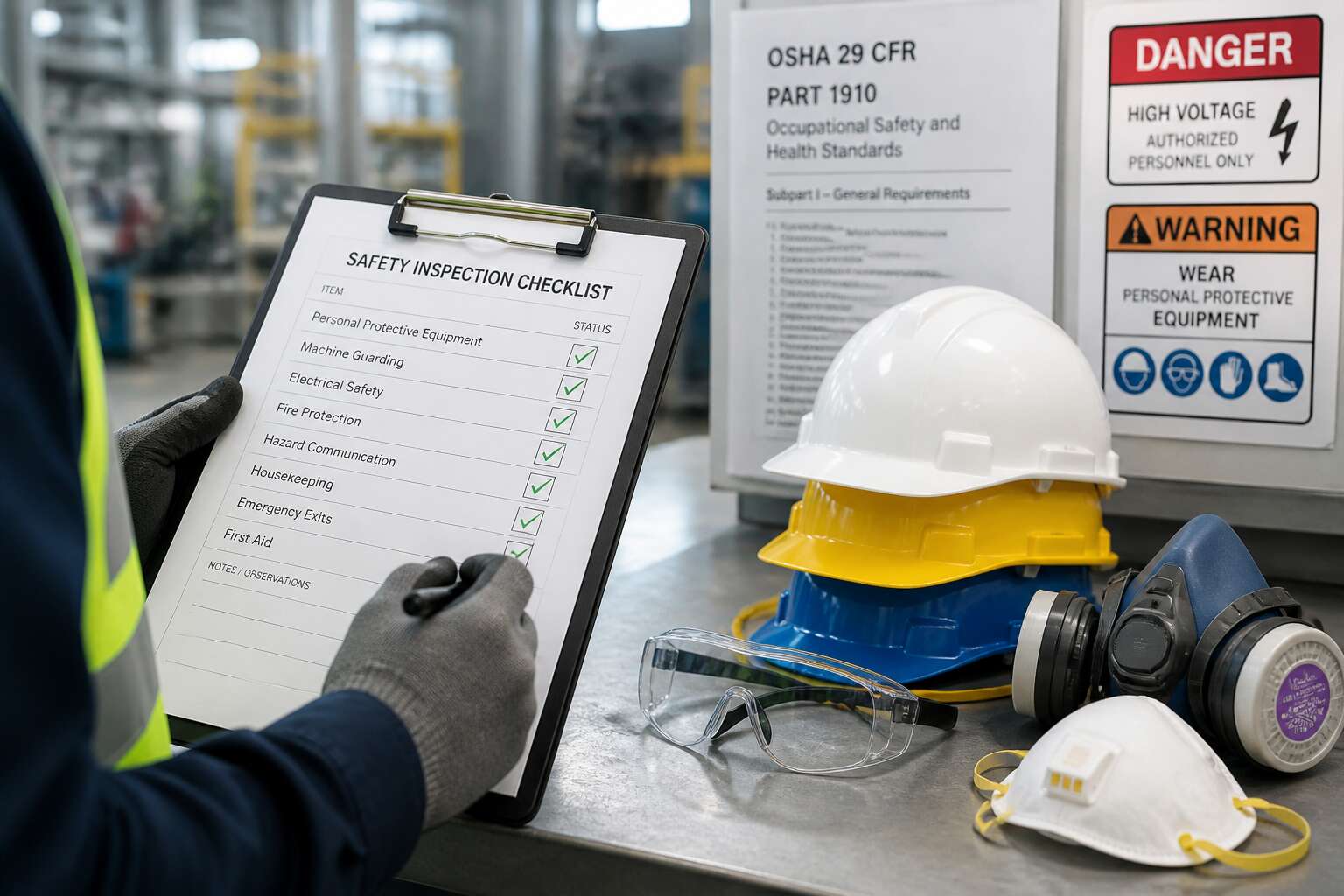
At the heart of the question, who regulates ppe in American workplaces? The Occupational Safety and Health Administration, or OSHA, stands as the primary federal agency. OSHA’s authority derives from the Occupational Safety and Health Act of 1970. This agency sets mandatory standards for protective equipment, conducts surprise inspections, and imposes fines for noncompliance. Its reach extends to nearly every private sector employer.
If you are wondering who regulates ppe in South Africa, the answer differs. Yet OSHA’s framework often serves as a global benchmark. Its regulations cover:
– Hazard assessments to determine PPE needs
– Training workers on proper usage
– Ensuring equipment meets recognized standards
OSHA’s enforcement style is direct, even blunt. Inspectors arrive unannounced! They check whether employees have respirators, gloves, and eye protection. They review records. They issue citations for infractions. This meticulous approach has shaped safety culture worldwide.
National Institute for Occupational Safety and Health
People frequently ask who regulates ppe, yet the National Institute for Occupational Safety and Health often escapes mention. NIOSH does not inspect workplaces or levy penalties. Instead, it performs scientific research and develops protective equipment standards. This agency tests respirators, filters, and other gear, awarding certification only after rigorous evaluation.
- Investigating emerging workplace hazards
- Recommending exposure limits
- Publishing guidance for industry
NIOSH data directly influence regulations in many countries. For South African readers, NIOSH certifications often appear on imported equipment. Understanding the regulatory picture requires seeing both sides: OSHA enforces, NIOSH informs. This partnership creates a feedback loop where real world incidents shape future protections.
Food and Drug Administration
For medical-grade equipment, the Food and Drug Administration occupies a distinct place. When people ask who regulates ppe, the FDA rarely comes to mind first, yet its authority is substantial. The FDA reviews surgical masks, isolation gowns, and examination gloves. It checks material strength, fluid resistance, and labeling accuracy before any product reaches market. This certification carries weight in South Africa, where imported medical supplies often display FDA clearance as a mark of reliability.
The FDA also tracks problems after approval. Hospitals and clinics report failures, and the agency can withdraw products that endanger workers or patients. It does not test respirators like NIOSH, nor does it inspect factories like OSHA. Instead, it ensures that the barriers between you and infection actually work. For South African procurement teams, FDA approval simplifies decisions. One look at the label tells you whether the item meets established standards for safety.
Environmental Protection Agency
When farmworkers open a bottle of pesticide, they rarely consider the quiet authority that shapes their protective gear. The Environmental Protection Agency, or EPA, is another answer to who regulates ppe, but its focus is chemical danger rather than infection or physical impact. It governs items designed to shield people from toxic substances in fields, labs, and cleanup sites.
EPA sets performance standards for chemical-resistant gloves, aprons, and face shields. It also inspects labelling to ensure instructions match real protection levels. Products that fail these checks never reach shelves. For South African buyers sourcing abroad, EPA labels indicate trust.
- Gloves that resist specific solvents
- Coveralls for pesticide application
- Eye goggles sealed against splashes
This agency follows problems too. Reported exposure incidents can trigger withdrawals. So when someone asks who regulates ppe, the EPA deserves recognition for guarding workers against invisible threats.
Mine Safety and Health Administration
In the dim corridors of a platinum mine, the question of who regulates ppe takes on a gritty urgency. The Mine Safety and Health Administration, or MSHA, is the agency that answers this call for underground operations, yet its standards echo far beyond American borders. Miners face hazards unlike any other profession, and MSHA tailors its rules accordingly.
MSHA sets requirements for steel-toed boots, hard hats, and self-rescue breathing devices. It also enforces strict limits on noise exposure, which means hearing protection is never optional. For sourcing teams in Johannesburg, MSHA approval signals that gear has survived rigorous testing.
Consider what MSHA scrutinises:
- Impact resistance for headgear against falling rock
- Filter efficiency for dust-laden air
- Flame resistance for garments near ignition sources
Each standard exists because collapse, dust, and fire do not wait for negotiation. When buyers look to global markets, understanding who regulates ppe in the mining sector becomes a matter of life and breath.
International Regulatory Frameworks
European Union CE Marking
Europe’s answer to “who regulates ppe” is a quiet, self-aware arrangement. The CE mark doesn’t come from a government inspector. It springs from the manufacturer’s own declaration, a pledge that their gear meets harmonised standards. For lower-risk items, like simple gloves, that declaration suffices. But the system escalates for serious hazards.
Certain categories demand external oversight. Independent notified bodies verify the trickier designs, ensuring they truly shield the wearer. These include:
- Respiratory protective devices
- Equipment for fall protection
- Thermal and chemical barriers
This framework devolves accountability, placing the onus squarely on those who stitch, mould, and assemble your safety. And that makes the CE mark a promise, not a stamp.
International Organization for Standardization
When the question of who regulates ppe crosses borders, the International Organization for Standardization enters the picture. ISO does not issue fines or conduct inspections. It builds consensus among member nations, including South Africa through the South African Bureau of Standards. The result is a library of technical specifications defining seam strength, chemical resistance, and other performance criteria.
ISO standards matter because regulators adopt them into law. A standard written in Geneva becomes a benchmark in Pretoria. For imported gear, this alignment determines whether a product clears customs or gets rejected. Key areas of coverage include:
- Material durability under repeated use
- Penetration thresholds for liquids and particulates
- Ergonomic fit and sizing systems
So when someone asks who regulates ppe internationally, the answer is a network of national bodies working from ISO’s framework. South African inspectors apply those same benchmarks on the factory floor.
World Health Organization Guidelines
“Outbreaks are unpredictable, but PPE needs are not.” The World Health Organization does not run factories. Yet its guidance decides which gloves reach a clinic in Durban. During epidemics, WHO publishes rapid assessments on respirator filtration and fluid resistance. South Africa’s health department turns these into purchase orders and stockpile rules.
WHO also runs emergency use listings. A product that clears that process moves through customs faster. That is who regulates ppe when the pressure hits. It is a quiet authority, built on evidence rather than inspections.
Harmonized Standards Across Borders
Who regulates ppe when a product crosses three borders before it reaches a clinic in Durban? No single office. The answer is a set of harmonized standards that move alongside the cargo. Test reports from one lab are accepted by regulators in another. That trust is built through agreements, technical committees, and reference documents that align test methods across countries.
- Mutual recognition agreements cut duplicate testing.
- Regional bodies like the African Organisation for Standardisation align national norms.
- Manufacturer self-declarations count only when backed by accredited labs.
Each layer requires faith in someone else’s inspection. When that faith holds, a compliant product in Pretoria is also compliant in Nairobi. When it cracks, the consequences land on the person wearing the equipment, not the committee that wrote the rule. So who regulates ppe? The collective vigilance of every party in the chain.
Sector-Specific Oversight
Healthcare and Medical Settings
In South African hospitals, the answer to who regulates ppe shifts depending on the setting. The National Department of Health sets overarching policy, but provincial departments enforce it at facility level. This layered system means a nurse in Gauteng might face different compliance checks than one in the Western Cape!
SAHPRA oversees the quality of medical devices, including respirators and surgical masks. The HPCSA governs professional conduct around infection control. For healthcare workers, this distinction matters; it determines which gear reaches your hands.
- National Department of Health: policy and procurement standards
- SAHPRA: device quality and performance verification
- HPCSA: professional accountability for proper use
I have observed procurement officers navigating these overlapping mandates daily. The oversight landscape is fragmented, yet each layer serves a distinct purpose.
Construction and Heavy Industry
On a Johannesburg construction site, the answer to who regulates ppe is written into site induction documents and safety files. The Department of Employment and Labour inspects compliance with the Occupational Health and Safety Act, while the Construction Industry Development Board sets procurement and competency benchmarks for contractors.
Those two layers often overlap with manufacturer testing standards:
- The South African Bureau of Standards verifies hard hats and safety boots.
- The National Regulator for Compulsory Specifications covers certain protective clothing.
- Provincial inspectors enforce local by-laws on scaffold safety and fall arrest equipment.
I have seen site managers juggle these requirements daily! The fragmented structure can frustrate, but each mandate targets a specific failure point, from weld flash burns to crush injuries. That is the real answer: a chain of inspectors, regulators, and standards bodies, each with a distinct role.
Laboratory and Research Environments
Laboratories and research facilities in South Africa do not answer to a single authority. The Department of Employment and Labour inspects general compliance, while the South African Bureau of Standards and the National Regulator for Compulsory Specifications test the gear itself. Institutional biosafety committees add a third layer, writing internal rules for gloves, respirators, and chemical aprons.
Ask who regulates ppe in this environment and you get a layered response. I have watched lab managers reconcile SABS certificates with committee mandates, sometimes finding gaps between them. One national standard covers the product, while a local protocol governs its use in a specific fume hood.
- Department of Employment and Labour: workplace inspections
- SABS: product quality testing
- NRCS: compulsory specification enforcement
- Institutional biosafety committee: task specific usage rules
Each entity tracks a distinct failure point. None holds complete authority, which is why the answer to who regulates ppe never fits in a single sentence.
Emergency Response and First Responders
When an ambulance crew or firefighter suits up, the question of who regulates ppe becomes urgent. In South Africa, emergency services answer to provincial health departments for ambulance crews, while fire services fall under municipal authorities. Neither fully controls the quality of the gear itself.
The Health Professions Council of South Africa sets clinical practice standards for emergency care practitioners. The Department of Employment and Labour enforces the Occupational Health and Safety Act on scene. SABS testing applies to the equipment, but local station managers decide what is actually worn.
The layers of control include:
- HPCSA: registers and disciplines emergency care practitioners
- Provincial health departments: specify ambulance equipment
- Municipal fire services: manage turnout gear and breathing apparatus
- Department of Employment and Labour: inspects scene safety
The answer to who regulates ppe for first responders shifts with each incident. A respirator can meet national standards yet fail a provincial tender specification. The person wearing it faces conflicting requirements, and the gaps between them show up on the scene.
Manufacturing and Industrial Use
On the factory floor, the question of who regulates ppe takes on a different form. The National Regulator for Compulsory Specifications (NRCS) enforces mandatory standards for industrial gloves, safety footwear, and eye protection sold in South Africa. The SABS mark on a hard hat does not end the matter. It is the beginning of a longer negotiation between the supplier and the site.
For manufacturers, the NRCS approves products before they reach the market. For employers, the Department of Employment and Labour enforces their use through the Occupational Health and Safety Act. The two systems do not always align. A product can hold a valid letter of authority yet fail a risk assessment on site.
Who regulates ppe in this chain depends on the point of failure:
- NRCS: oversees product compliance and market access
- SABS: tests and certifies against national standards
- Department of Employment and Labour: audits workplace use
Agricultural and Chemical Handling
A farm worker’s respirator sits between the chemical label and the body absorbing the risk. In South African agriculture, who regulates ppe depends on several authorities. The Department of Employment and Labour enforces the Hazardous Chemical Agents Regulations under the OHS Act, while the Registrar of Act 36 of 1947 controls the chemical products themselves. That split creates a surveillance gap. A pesticide may be registered, yet the respirator specified for it may never arrive.
Oversight comes from multiple directions:
- The Registrar checks product labels and safety data sheets.
- The Department inspects farm practices and medical surveillance.
- Employers carry the final duty to provide and enforce the gear.
The answer shifts with the crop cycle and the toxicity level.
State and Regional Authorities
State-Level Occupational Safety Plans
While national bodies set the baseline, the reality of enforcement often lives much closer to home. State and regional authorities hold significant power in determining exactly who regulates ppe within their borders, creating a complex mosaic of legal obligations. These entities enact their own occupational safety plans, which can be decidedly stricter than federal standards. For a business operating across multiple regions, this means compliance is not a single task but a continuous process of verification against local statutes.
This localized oversight frequently introduces procedural requirements that are not found in national guidance. It is a point often missed by companies focused solely on centralised rules.
– Mandatory registration of safety equipment with a regional body.
– Specific training certifications for workers that are unique to the state.
– Additional documentation and record-keeping mandates for every piece of kit issued.
Navigating this layered system requires a proactive approach. A company must identify the specific provincial or municipal agency that holds jurisdiction over its industry and then map their requirements against federal rules. In South Africa, for instance, provincial departments can add their own layers of inspection and approval. The result is a system where the answer to who regulates ppe is not static; it shifts based on your physical location and the specific nature of the work being performed.
Local Municipal Regulations
Municipal authorities in South Africa hold a decisive administrative lever over PPE enforcement. Their inspectors operate under local bylaws that often go beyond provincial or national codes. For businesses, that means the answer to who regulates ppe depends on which municipality you call home.
- Site-specific risk assessments filed with the local authority.
- Verified proof of PPE issuance for every shift.
- Colour-coded tagging systems for equipment checks.
These obligations differ across townships and cities. A warehouse in Johannesburg may answer to the City of Johannesburg’s environmental health directorate, while a similar operation in Ekurhuleni faces separate rules. Consequently, regulatory oversight shifts with your municipal boundaries, making local knowledge a practical necessity.
Regional Health Department Requirements
Provincial health departments layer their mandates on top of municipal enforcement. They track occupational injuries and evaluate whether protective gear actually prevents disease. The answer to who regulates ppe expands here, because regional authorities can shut down a facility for noncompliance. Consider the Gauteng Department of Health’s intervention protocols. They review workplace exposure records and verify that respirators match the hazard. A facility that fails these checks faces immediate suspension.
Regional health departments also issue directives that override local interpretations. This becomes a daily reality for safety officers. These requirements remain consistent across districts, yet enforcement intensity varies with staffing levels. The Western Cape, for instance, demands stricter medical surveillance than some northern provinces. Inspectors there expect written proof of every equipment exchange, not just verbal assurances. The provincial layer truly decides who regulates ppe once disputes arise.
Compliance, Inspection, and Enforcement
Mandatory Standards vs Voluntary Guidelines
When asking who regulates ppe, the answer splits between enforceable law and optional guidance. Mandatory standards carry legal weight, meaning a workplace can be fined or shut down for non-compliance. Voluntary guidelines, while not legally binding, often serve as a roadmap for best practice. In South Africa, the Department of Employment and Labour enforces the Occupational Health and Safety Act, but other bodies issue recommendations that do not trigger inspection.
Consider the difference in practice:
– Mandatory failure results in penalties, prohibition notices, or criminal charges.
– Voluntary failure only affects reputation or insurance premiums.
Inspectors focus on mandatory standards. They rarely cite a voluntary guideline. But courts sometimes reference voluntary guidelines to define negligence. So the true answer to who regulates ppe is both, but only one has teeth. The question of who regulates ppe in a practical sense comes down to enforcement, and that always rests with the mandatory side.
Inspection Procedures and Frequency
Some workplaces see an inspector every few months; others never hear a knock. The Department of Employment and Labour prioritises high hazard sectors, so a paint shop faces annual checks while a call centre might wait a decade. Routine inspections follow a checklist: storage containers, respirator seals, glove thickness, disposal logs. But enforcement often starts with a complaint.
- injury reports that mention skin contact
- an anonymous tip about missing face shields
- a spike in respiratory illness records
A single worker’s phone call can trigger a surprise visit within days. During that visit, inspectors photograph defects, copy training registers, and issue improvement notices. Frequency rises with each failure. Repeat offenders get unannounced sweeps. That is how you know who regulates ppe in practice. The enforcement calendar itself reveals the answer.
Penalties for Non-Compliance
Compliance is not voluntary. The Department of Employment and Labour can issue a prohibition notice that halts operations instantly. For serious breaches, inspectors refer cases for criminal prosecution. Fines under the Occupational Health and Safety Act reach thousands of rand per offence. Directors face personal liability if negligence leads to injury.
Enforcement penalties for non-compliance follow a graduated scale. First offences often bring corrective orders. Repeat violations escalate to court summonses. Some employers discover the true answer to who regulates ppe only when a cease work order lands on their desk.
- Warnings for minor paperwork gaps
- Fines up to R50,000 per violation
- Imprisonment for reckless endangerment
Inspection reports become evidence. A single missing respirator certificate can unravel an entire safety program. The regulator does not need an accident to act. It only needs proof of neglect.
Recordkeeping and Documentation Requirements
Recordkeeping forms the backbone of any PPE compliance strategy. The question of who regulates ppe extends beyond initial approvals; it reaches into how long you keep respirator fit test records, medical evaluations, and training logs. South African regulations demand these documents remain accessible for inspection.
A well maintained file demonstrates ongoing diligence. Inspectors compare your written programme against what actually happens on the floor. Discrepancies create liability. Your documentation must align with the specific hazard assessments for each work area. This means updating records whenever processes change, not just annually.
Without accurate records, even a compliant workplace appears negligent. The regulator weighs your paper trail as heavily as your physical controls.
Whistleblower Protections and Reporting Channels
Whistleblower protections often determine whether violations ever surface. In South Africa, workers who report PPE failures are shielded from retaliation, but only when they follow the correct channels. The question of who regulates ppe extends to safeguarding those who speak up.
Your reporting options include several pathways:
- Department of Employment and Labour inspection hotlines
- Provincial health and safety directorates
- Trade union safety representatives
- Anonymous tip lines for hazardous conditions
Each channel demands specific documentation. I have seen cases where a dismissed whistleblower lost protection because they bypassed the provincial directorate and went straight to the media. Know your jurisdiction before you act.

0 Comments