
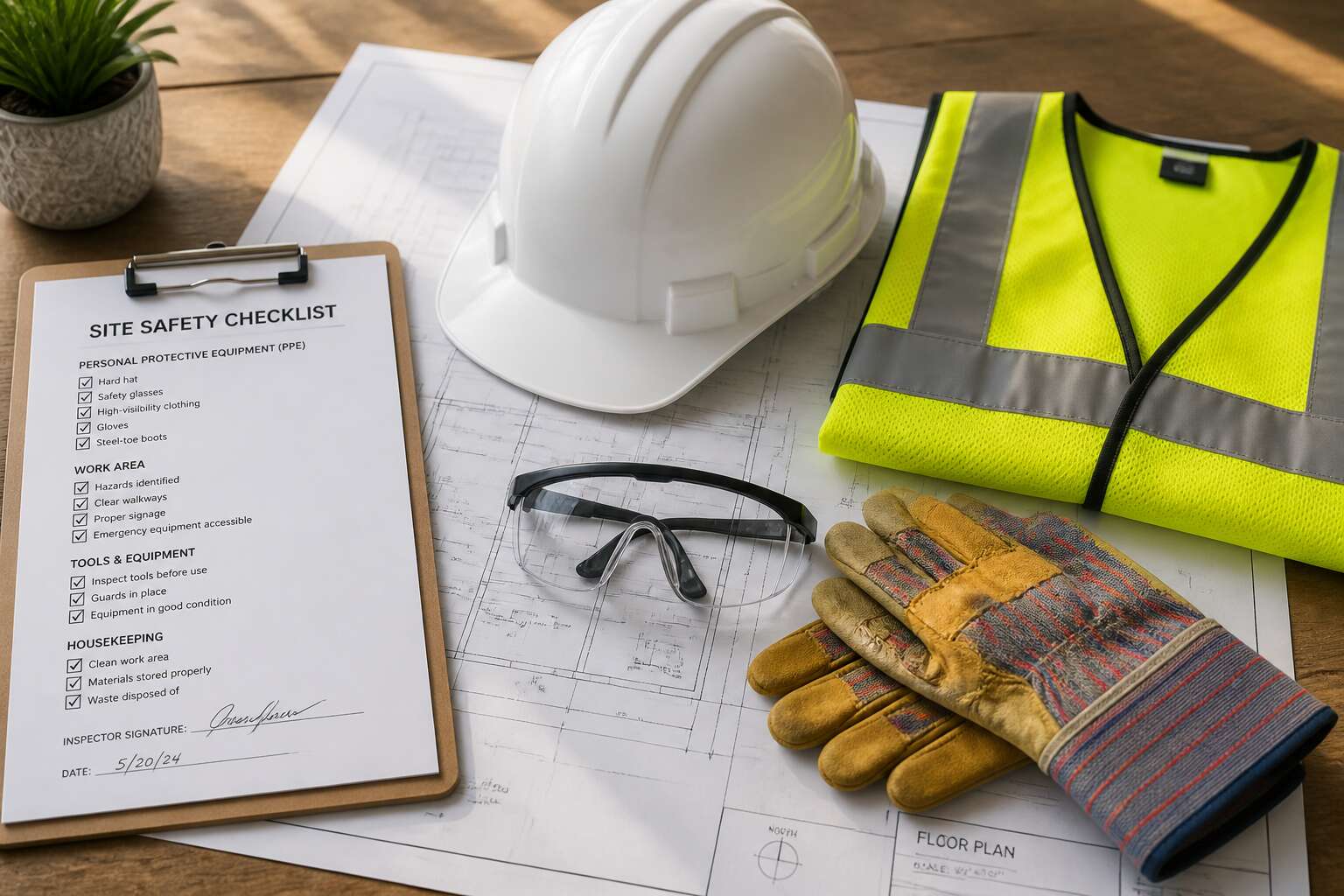
Understanding the Fundamentals of Workplace Protection Policies
Defining the Scope and Objectives of Protective Gear Regulations
Every workplace has a story about the time something almost went wrong. A dropped wrench, a chemical splash, a moment of hesitation that could have changed everything. What separates a close call from a catastrophe often comes down to the quiet framework that exists before anyone steps onto the floor. That framework is your ppe policy construction, and getting it right requires more than just buying the most expensive gear on the market.
At its heart, the ppe policy construction process is about defining the specific hazards that exist in your unique environment. A construction site in Johannesburg faces different risks than a laboratory in Cape Town. Your policy must start with a thorough risk assessment that identifies every potential exposure point. This means walking through each task, observing how work actually happens, and talking to the people doing the job. The document you create should be a reflection of your operational reality, not a generic template pulled from the internet.
Once you have identified the hazards, you need to set clear objectives for your ppe policy construction. These objectives should answer a few fundamental questions.
– What injuries are you trying to prevent?
– Which body parts require protection for each specific task?
– What standards must the equipment meet to be considered adequate?
– How will you ensure that employees understand when and how to use the equipment?
These questions form the backbone of your entire program. They move you from vague intentions to measurable outcomes, giving you a clear reference point for audits and reviews.
Of course, a policy only works when it reflects the realities of your workforce. The ppe policy construction must consider comfort, fit, and usability. If the gloves are too thick, workers will take them off. If the goggles fog up, they will end up pushed onto foreheads within an hour. You need to involve your team in the selection process, allowing them to test different options and provide feedback. This practical input is invaluable, because it bridges the gap between theoretical compliance and actual daily use.
The South African context adds another layer of responsibility. Our regulations demand specific compliance, and the ppe policy construction must align with the Occupational Health and Safety Act. This is not just a legal checkbox; it is a moral commitment to the people who contribute to your success. The policy should clearly state the responsibilities of both the employer and the employee, creating a shared accountability structure. Training sessions must be practical and ongoing, not a once-off induction video that nobody remembers.
Ultimately, the ppe policy construction is a living document. It should be reviewed whenever you introduce new equipment, change a process, or experience an incident. The real value lies in the conversations it generates and the culture it builds. A robust policy tells every employee that their safety is a priority, not a footnote. It provides the clarity needed for people to make the right decisions under pressure, and that clarity is what makes the difference between a story about a close call and a story about a serious injury.
Legal Frameworks and Industry Standards Shaping Compliance
Every ppe policy construction must anchor itself to the legal frameworks that govern workplace safety. In South Africa, the Occupational Health and Safety Act sets the baseline, but industry standards like SANS 50131 for hearing protection or SANS 1865 for headgear add specific requirements. Compliance is not a single checkbox. The Department of Employment and Labour expects you to demonstrate how your controls align with the hierarchy of hazards. Your ppe policy construction should reference the relevant regulations and then translate them into operational steps. That means documenting supplier declarations, testing certificates, and scheduled inspections.
A practical way to structure this:
- List the applicable SANS and ISO standards per task.
- Record the date of each audit or review.
The goal is to stay current with amendments, which often arrive without fanfare.
Assessing Workplace Hazards to Identify Equipment Needs
Workers remove hard hats the moment a supervisor turns away. I have witnessed this on sites across Gauteng. That single image explains why ppe policy construction must begin with understanding human behaviour, not equipment specifications. The fundamentals of workplace protection policies depend on a reality: protective gear only works when it integrates with the job. Every ppe policy construction effort that ignores this yields spotless documentation and unprotected people.
Assessing workplace hazards to identify equipment needs demands a physical presence in the workspace. It requires standing beside the operator, timing the exposure, measuring the distances, and calculating the risks that exist between scheduled inspections.
A credible assessment captures:
– The sequence of each task and its duration
– The environmental conditions at different times of day
– The interaction between different work crews in the same space
Only then does equipment selection become a matter of evidence rather than assumption.
Roles and Responsibilities Across the Organization
Every ppe policy construction effort hinges on one fragile element: the human chain that carries it from the boardroom to the factory floor. A policy that defines responsibilities with clarity transforms a stack of paper into a living system. When roles blur, accountability dissolves, and workers learn to treat the rules as suggestions. In my years walking through workshops and construction sites in South Africa, I have seen the difference between companies where the safety officer owns every decision and those where protection belongs to everyone.
Management must set the tone by providing resources and removing the barriers that make compliance a burden. Supervisors translate that commitment into daily practice, correcting unsafe habits with patience rather than punishment. Workers carry the final responsibility: wearing the gear, reporting defects, and watching out for the person beside them. Each level depends on the others, and a breakdown anywhere ripples outward.
- The safety officer coordinates training and conducts regular audits
- Team leaders enforce standards during shift changes and peak hours
- Procurement staff ensure replacements arrive before old stock fails
I recall a maintenance crew in Springs where the foreman believed his only duty was handing out gloves. When a hand injury occurred, the investigation revealed that nobody had checked the glove sizes for months. That incident taught the organisation a painful lesson about distributed ownership. The ppe policy construction that finally worked there assigned specific checkpoints to specific people, with signs-off recorded and reviewed. A policy without named champions is merely a wish.
Whether your workplace employs twenty people or two thousand, the hierarchy of responsibility needs to be explicit. Written procedures matter, but they only gain meaning when individuals feel their absence would be noticed. This human dimension of ppe policy construction often separates thriving safety cultures from those that merely survive audits.
Key Elements of an Effective Protection Equipment Program
Selection Criteria for Appropriate Safety Gear
In2023, the Department of Employment and Labour reported that a significant percentage of workplace fatalities involved inadequate or poorly maintained safety gear. That statistic is a stark reminder that a paper policy is worthless if the actual equipment fails when it matters. Building a robust ppe policy construction requires attention to the tangible details that often get overlooked during the planning phase.
Once you have assessed your hazards, the programme itself needs concrete components that function daily. It is not enough to have a document that sits in a drawer; it must dictate the flow of procurement, maintenance, and enforcement.
– Certification requirements for all purchased equipment to ensure compliance with SANS standards
– A formal schedule for inspecting and replacing worn or damaged items
– A structured training matrix that documents each employee’s competency
– A disciplinary protocol for repeated non-compliance that is enforced consistently
– A feedback loop for workers to report faulty gear without fear of reprisal
Selection criteria for appropriate safety gear is the next critical layer. This process goes far beyond simply handing out hard hats and gloves. You need to consider the ergonomic fit for the individual, not just the aggregate hazard level. A respirator that fits one face perfectly may leak on another, rendering it useless. Similarly, chemical-resistant gloves must match the specific solvents used in your operations; a universal option rarely offers adequate protection.
For ppe policy construction to be truly effective, procurement must involve the end users, not just the safety officer. Workers often know which gear is impractical for their tasks, such as gloves that reduce grip or goggles that fog up. When you exclude them from the selection, you invite creative non-compliance. Therefore, the criteria must include field trials and a system for employees to sign off on the comfort and functionality before bulk orders are placed. This approach ensures that the gear is not only correct on paper but is also worn in practice.
Procurement, Storage, and Inventory Management Strategies
One key element that determines whether a ppe policy construction holds up on the shop floor is procurement. Buying the cheapest option on the tender list delivers predictable outcomes. I have walked into storage rooms where respirators sat under toolboxes. That disorganisation undermines compliance.
A proper inventory system tracks shelf life, batch numbers, and certification documents. Damaged stock needs quarantine immediately. Storage conditions deserve the same attention as purchase price.
Consider these practices:
– Store chemical gloves away from direct sunlight and heat.
– Keep respirators in sealed bags until issued.
– Rotate stock so older items are used first.
– Maintain a written record of every issued item.
Without these strategies, a ppe policy construction fails at the first audit and puts workers at risk.
Maintenance, Inspection, and Replacement Schedules
A PPE program is only as strong as its weakest link, and often that link is the silent failure of equipment after it has been issued. The best procurement strategy and the most rigorous initial risk assessment mean nothing if a harness is frayed or a lens is scratched. This upkeep, the daily grind of checks and replacements, is where the true character of your safety culture is revealed. To neglect this phase is to build a policy that looks excellent on paper but crumbles under the pressure of a real-world hazard.
The cornerstone of this phase is a disciplined inspection schedule. Users should conduct a quick pre-use check every single day, looking for obvious signs of wear, tears, or contamination. However, relying solely on the worker is a recipe for oversight. You need a formal, documented inspection by a competent person on a regular basis, typically monthly or quarterly depending on the equipment type and usage frequency. This log provides a paper trail that protects the worker and the organisation, proving that due diligence was performed long before an incident occurs.
Maintenance is not just about fixing things when they break; it is about preserving the integrity of the protective barrier. This involves proper cleaning protocols tailored to the material of the PPE. For example, washing chemical gloves with the wrong solvent can degrade them, while simply wiping down a hard hat with a harsh chemical can strip its UV protection. A practical approach involves centralised storage solutions and clear signage. Consider these operational steps to bridge the gap between policy and practice:
– Establish a designated clean area for PPE storage, separate from work zones.
– Provide clear, visual guides for the correct cleaning agents for each item.
– Assign responsibility for inventory checks to a specific team member.
Replacement is the final, non-negotiable pillar. Even with perfect care, PPE has a finite lifespan. Manufacturers provide expiry dates, but environmental factors like extreme heat or chemical splashes can shorten that life dramatically. A hard hat that has taken a significant impact should be retired immediately, not just inspected. This requires a culture where workers feel empowered to report damage without fear of reprisal or the cost of a new unit. Budgeting for a steady stream of replacements is an operational necessity, not an optional extra.
Ultimately, a robust maintenance schedule transforms a static safety manual into a living system. It turns the concept of “ppe policy construction” from a one-time project into an ongoing cycle of vigilance. By addressing the mundane details of care and replacement, you prevent the catastrophic failures that no amount of initial planning can foresee. This is the daily grind that keeps people safe, ensuring the gear works when it matters most.
Documentation and Record-Keeping Best Practices
Documentation supports your ppe policy construction. Without records, safety decisions rest on memory and hearsay. Every risk assessment, equipment issue, and training session should leave a trace. This is not bureaucracy; it is accountability!
Store records where a safety officer can retrieve them within minutes. Include issue dates, inspection outcomes, and employee signatures. A digital register reduces paper loss and allows quick searches. We recommend scanning signed forms immediately after each session.
- Log every equipment issue and return.
- Record each inspection result.
- Keep training attendance lists.
South African workplaces face extreme heat and dust. These conditions accelerate equipment wear. Your records must capture that reality, not rely on manufacturer expiry dates alone. Regular audits of documentation reveal patterns before injuries occur. A well kept file protects the worker and the company when an incident triggers investigation.
Emergency Procedures and Contingency Planning
Emergency procedures are the stress test for any protective gear program. When a spill or fire occurs, workers must reach functioning equipment without hesitation. Contingency planning goes further, anticipating what happens when the usual gear is unavailable.
A stockpile for surge demand, a backup supplier, and a clear evacuation signal are all part of this framework. In South African workplaces, load shedding or extreme heat can disrupt normal routines. A solid ppe policy construction accounts for these failures before they become injuries.
Every team member should know the emergency drills by heart. Practice different scenarios on a rotating schedule. Use real equipment instead of walkthroughs. Untested plans are merely hopes.
- Identify emergency exit routes and gear stations.
- Assign a deputy safety officer for every shift.
- Schedule quarterly mock emergencies.
Budgeting and Cost Allocation for Sustainable Programs
Budgeting in safety gear is rarely glamorous, yet it decides outcomes. In South Africa, a diesel price spike or a supplier’s exchange rate adjustment can threaten a program’s durability. Effective ppe policy construction treats cost allocation as a recurring process, not a single negotiation.
Start with a baseline audit of every worker’s gear requirements. Add a buffer for inflation and unexpected downtime. Load shedding accelerates wear on visors and batteries, so allocate extra for those items.
- Annual replacement quotas for gloves and respirators
- Funds for new hazard controls as processes change
- Training time for proper gear fitting and usage
Monitor spending per employee each quarter to reveal where funds leak. Compare injury claims data against gear costs. A modest rise in upfront expense often prevents a serious payout later. That is not speculation; it is arithmetic.
Steps to Develop and Implement Your Policy
Conducting a Comprehensive Workplace Risk Assessment
Some 22,000 working days are lost annually in South Africa due to workplace injuries, making the pre-planning stage of your ppe policy construction feel less like paperwork and more like essential survival kit preparation. The real challenge emerges when you attempt to translate these high-level requirements into practical daily action. This is the phase where perfectly good intentions often go to die, buried under a pile of impossible checklists and vague safety directives.
The entire process starts with a proper look around. You need to identify every potential irritation, from the obvious sparks flying off a grinder to that peculiar dust that settles on the windowsills and makes everyone sneeze after lunch. A walkabout without a clear checklist is just a stroll, so bring a notepad or a tablet and record everything. You are looking for physical, chemical, and biological hazards, as well as ergonomic traps. This stage is not about elegance; it is about unflinching observation.
The chaos of the assessment phase eventually gives way to a structured plan that everyone can actually use. Once you have a list of hazards, you must rank them. Which one could kill someone today? Which one will cause chronic back pain in five years? This priority list guides the specific types of gear you need, but it also reveals gaps in training and supervision. A ppe policy construction that ignores these findings is just a decorative poster on a wall, offering no protection to the people working under a hot Johannesburg sun.
Regularly returning to the floor is the only way to ensure your initial analysis is not fictional. Equipment changes, processes evolve, and employees find creative ways to bypass rules that seem inconvenient. The most effective approach involves the people doing the job, asking them where they feel exposed and what gear they actually hate wearing. This feedback loop turns a static document into a living system.
To ensure you capture the full scope during your initial sweep, look for hazards in these general categories:
– Mechanical energy, such as moving parts or falling objects.
– Chemical exposure, including vapors, liquids, and powders.
– Atmospheric conditions, like extreme heat or poor ventilation.
– Ergonomic strain from repetitive motion or heavy lifting.
– Electrical risks, including live wires and static discharge.
A solid plant inspection is the bedrock of your program, but you need a cadence for re-evaluating the site. Schedule reviews after any major incident, a near miss, or even a significant shift in production volume. Our local weather and load shedding schedules often introduce hazards no textbook predicted, so adapt your timeline accordingly. The goal is not to create a binder that sits on a shelf, but to forge a process that is as dynamic as the factory floor itself. The final result is a roadmap that balances legal compliance with real-world functionality, ensuring your safety investments mitigate actual risks rather than hypothetical ones.
Engaging Stakeholders and Encouraging Worker Input
The most honest conversations about safety happen at the coalface, not in a boardroom. When you finally step onto the floor and ask, “what makes you hesitate to wear this harness?” you unlock a wealth of practical intelligence. The quietest worker often has the loudest insights, and their feedback is the bedrock of effective ppe policy construction.
I have found that genuine engagement means listening for what is not being said. It is about observing the grimace when someone hauls on their respirator. That is your real data. A worker who helps choose their gear feels a sense of ownership that no memo can replicate. They become your most effective safety officers. This collaboration translates into rules that function in the real world, not just on paper.
Drafting Clear and Accessible Policy Language
A policy nobody reads is a rumour, not a rule. Crafting clear policy language for ppe policy construction demands brutal simplicity. Workers scan for their daily reality, not for corporate nuance. Write in short active sentences, and let the equipment’s name appear exactly as printed on its label.
When I draft, I test every clause against a loud, dirty room:
- Plain verbs (‘put on’) beat formal ones (‘don’).
- The hazard itself matters more than the regulation number.
- Exceptions belong beside the rule, not in a footnote.
Then I ask a new hire to recite the rule from memory. If they stumble, you have written an obstacle, not a policy. The grammar of safety must mirror the urgency of a shouted warning. That requires testing drafts with the cleaners, the welders, the loaders. Their edits turn paperwork into protection.
Establishing Training Requirements and Competency Checks
Training is the silent ceremony where policy becomes reflex. Without it, your ppe policy construction is a stack of paper, nothing more. I have walked through plants where the safety gear hung like decorations, unused because no one had ever been shown its true weight. A requirement written down is not a requirement understood. The rule that lives only in a file is a ghost, haunting the premises but never touching a single pair of hands.
The competency check must be a trial by fire, not a multiple choice questionnaire. Workers must prove they can don the gear in the dark, in the noise, under the pressure of a simulated emergency. Here is the skeleton of an effective regime:
– Hands on demonstrations where workers remove and replace equipment repeatedly until the motion is automatic.
– Verbal recitation of the hazard the gear protects against, forcing them to connect the object to the threat.
– Random spot checks on the floor, where a supervisor observes the habitual application of the rules.
These checks should feel like an inspection of the soul. If a worker cannot explain why they wear a specific respirator, their compliance is only a trick of the light, a surface habit that will fracture under real conditions. Training must be relentless, repeated until the equipment feels like a second skin, its absence a source of anxiety. Only then does your ppe policy construction move from the written page into the living muscle of the operation, a protective shroud woven from habit and fear. The test is not in the classroom, but in the grim, grinding hours of the shift itself. The South African sun and the dusty air will reveal the truth of your training, every day.
Rolling Out the Policy Across Teams and Locations
A policy that lives only in a binder is an epitaph, not a safeguard. The true measure of your ppe policy construction emerges the moment a worker steps onto the line, facing the hum of machinery or the bite of a chemical mist. This is where the theoretical becomes visceral, and where the silence of a well-oiled program speaks louder than any compliance audit.
Deploying the plan across multiple sites demands a rhythm that respects local variables. A warehouse in Durban contends with humidity that degrades certain materials faster than a dry Highveld facility. Your rollout must accommodate these environmental pressures without fracturing the core standards. Start with a pilot team at each location. Let them live with the new protocols, identify friction points, and report back before you scale.
The rollout itself is a sequence of deliberate movements. Consider this order of operations:
– Conduct a physical inventory audit to align stock with the specific hazard profile of each site.
– Install accessible dispensing stations that are within 15 seconds of the work zone, eliminating the excuse of distance.
– Assign a floor champion who can correct a loose strap or a missing glove on the spot, without waiting for a formal review.
– Schedule follow-up observations at the 30, 60, and 90 day marks to catch the slow slide back into old habits.
– Integrate the policy review into existing safety briefings, ensuring it breathes alongside daily operational updates.
The paper is merely the cartographer’s map. The terrain, with its shifting light and unexpected obstacles, is where your workforce writes the real story. A roll-out that ignores the human element, the fatigue of a night shift or the rush of a deadline, is destined to be ornamental. The true gauge is whether the gear is worn when no supervisor is watching, a quiet testament to a culture that has finally absorbed the lesson. Your ppe policy construction is only as strong as the day-to-day reality it shapes, a reality forged not in the boardroom, but in the grit and grace of the working floor.
Monitoring Adoption and Addressing Initial Gaps
According to the International Labour Organization, over 2.4 million workers die each year from occupational injuries and diseases. Many of those lives end because protective gear sat in storage or was never put on at all. Monitoring adoption after rollout is where your ppe policy construction proves whether it protects or simply exists.
Adoption works at different speeds. Some crews adjust quickly; others leave new gear hanging on hooks by the lunch stand. Look at the evidence without waiting for the audit. A split burning glove that mysteriously stayed clean tells you where the rules failed.
- Compare replacement time with the actual hours a mask was worn
- Track whether workers sign for the gear they actually use
- Listen for the harm that the stock never reflects
Initial gaps surface in the first thirty days. Adjust them fast and the plan holds firm.
Compliance, Training, and Continuous Improvement
Developing Targeted Training Modules for Different Roles
Compliance with any ppe policy construction hinges on how well training speaks to distinct functions. A generic slideshow fails the warehouse operative who needs tactile glove inspection drills and the office manager who only requires hazard recognition basics. We build role based curricula, then refine them with incident observations and worker feedback. This is where continuous improvement becomes tangible.
Training modules must evolve alongside risk assessments and equipment upgrades. For instance, our rotating schedule includes:
– Monthly toolbox talks for field crews
– Quarterly refreshers for supervisors on enforcement
– Annual simulations for emergency responders
Each tier maps to measurable competency checks. Without this granular approach, compliance remains aspirational. Therefore, we audit training efficacy regularly, adjusting content whenever gaps appear. That loop transforms static rules into living practice.
Auditing and Evaluating Policy Effectiveness
The true test of any ppe policy construction emerges not during the initial rollout, but in the quiet months that follow, when routines settle and vigilance can wane. An audit is not a punitive exercise; it is a conversation between the written word and the daily reality on the factory floor or the construction site. We treat these evaluations as a diagnostic tool, one that reveals the distance between our intentions and the lived experience of the workforce.
This process begins with structured observation, but it does not end with a checklist. We must ask whether the gear itself is adequate, whether the protocols are clear, and whether the training truly prepared a worker for the specific pressures of their shift. A compliance scorecard only tells us what is visible. The deeper insight lies in the near misses and the quiet circumventions that workers sometimes employ when equipment is cumbersome or procedures feel impractical.
Our auditing matrix focuses on three core pillars to capture this complete picture.
1. Observational data from unscheduled site visits, capturing real world behavior.
2. Analysis of incident reports and first aid records for patterns related to equipment failure or misuse.
3. Confidential feedback from employees on the usability and comfort of safety gear.
Each element feeds back into the training schedule and the selection criteria. When we detect a recurring issue with glove dexterity in a specific assembly line, we do not simply reissue the same product. We revisit our procurement strategy and adjust the practical drills for that team. This responsive loop ensures that the policy remains a living framework, constantly recalibrated to the shifting realities of the work environment. In this way, compliance becomes a byproduct of a culture that values honest feedback over blind adherence, making the policy stronger with each cycle of reflection and revision.
Handling Non-Compliance and Corrective Actions
Non-compliance on a site often starts as a simple workaround. A worker shortens a procedure because the prescribed method feels slow or the gloves restrict movement. These small deviations are not signs of poor attitude. They are signals embedded in daily routine. We treat each one through a corrective action sequence that begins with listening.
- Hold a quiet conversation with the worker involved
- Test the equipment against the demands of their specific task
- Review whether the ppe policy construction supports or obstructs safe practice
This sequence feeds directly into retraining and procurement decisions. Each incident becomes a lesson that strengthens the ppe policy construction. In South African workplaces, this loop turns enforcement into shared responsibility. Workers see that their feedback changes the gear and the drills. The site becomes safer because the response is consistent, fair, and rooted in real conditions rather than blame.
Leveraging Incident Data to Refine Procedures
In South Africa, the gap between a documented safety programme and the daily reality on the ground is often measured in millimeters—the thickness of a glove, the weight of a visor, the flexibility of a boot. We spend considerable energy drafting the ideal PPE policy construction, yet compliance often hinges on the smallest physical details. The most effective approach blends rigorous enforcement with genuine empathy, recognising that a worker who refuses gear is frequently raising a valid design flaw rather than a disciplinary issue.
Consider the feedback loop as a practical tool for refining the ppe policy construction. When an incident occurs, we move beyond blame and engage in a structured review of the equipment itself. This process bridges the gap between the boardroom and the blast site. To make this actionable, we rely on a straightforward sequence:
– Observe the specific task where the breach occurred.
– Interview the worker to understand the physical friction caused by the gear.
– Compare the current equipment specifications against the actual environmental hazards.
– Adjust the policy to incorporate their ergonomic insights.
This cycle transforms a simple safety violation into a data point for organisational learning. When a worker sees their suggestion reflected in new equipment or revised drills, the culture shifts from enforcement to ownership. It is the difference between handing out a fine and building a partnership. We encourage a reporting culture where near-misses are logged not as confessions, but as valuable contributions to the site’s safety database. This proactive reporting feeds directly into procurement decisions, ensuring that the next order of gear aligns with the realities of the South African climate and the specific demands of the job. Ultimately, a robust ppe policy construction is not static; it is a living document that breathes with the feedback from those who wear it every day.
Periodic Policy Reviews and Updates Based on Emerging Risks
Compliance lives and dies in the tactile world, not on a laminated poster. A worker wrestling with a respirator strap that chafes against the hard hat brim will find a way to loosen it, regardless of the written mandate. Effective training programmes must therefore pivot from abstract rule recitation to hands-on problem solving. We demonstrate the correct donning procedure, but we also simulate the crippling humidity of a Highveld summer afternoon. This sensory immersion builds muscle memory and reveals the practical friction points that a policy writer could never anticipate.
The true measure of any ppe policy construction is its capacity for self-correction. Static documents are obsolete the moment they are printed, because the hazard landscape shifts with every new mining shaft or altered chemical cocktail. A quarterly review cycle, triggered by weather patterns and incident logs, is non-negotiable. These audits should interrogate the performance of the gear against the actual forces it encountered:
1. Review the latest near-miss reports for patterns of equipment failure.
2. Consult shift supervisors on the physical usability of the current inventory.
3. Cross-reference new machinery specifications with existing protection ratings.
4. Issue a revised addendum to the old ppe policy construction before the next rotation.
This approach turns the policy into a reasoned response to lived experience. When the review process cites a specific heat-stress episode that led to a lighter vest, the workforce sees the logic in the change. The standard ceases to be an arbitrary decree and becomes an engineering solution. That cognitive shift is the bedrock of sustained adherence, where workers police their own practices because they understand the calculation behind the rule.

0 Comments