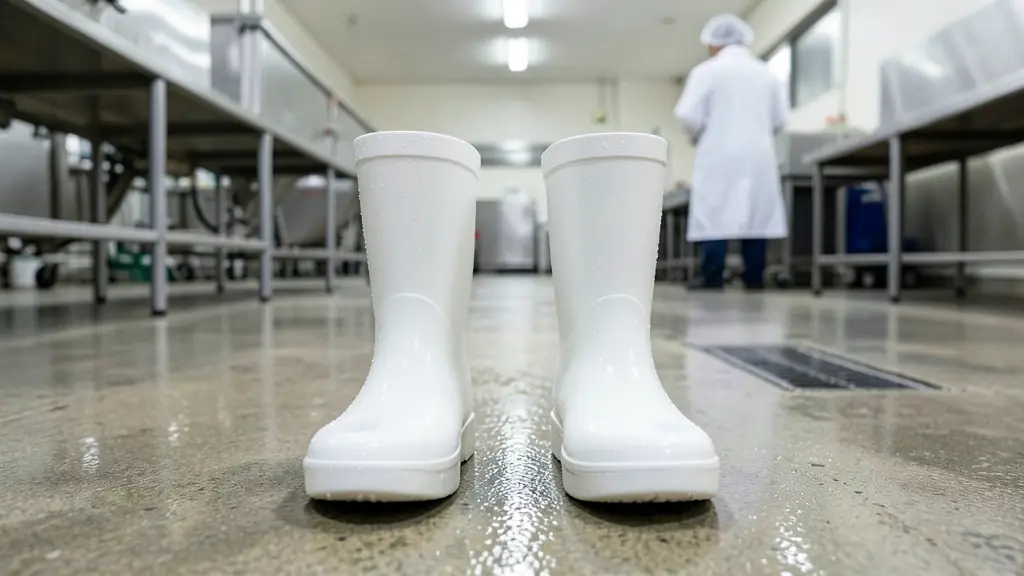
- PVC or nitrile-PVC compounds
- SANS 20345 S5 safety versions
- White food-grade or black and green
- Knee-high or ankle-height shafts
- Sizes 3 to 13, ladies' fits
Gumboots keep feet dry and protected where floors are wet, muddy or washed down. PPESuppliers.co.za is a free quote-request service for South Africa. Tell us the type of gumboot, sizes and quantity, and where you need them. We pass your request to independent PPE suppliers, manufacturers and wholesalers, who quote you directly. We do not sell gumboots ourselves. There is no charge and no obligation to accept a quote, so you can compare offers for your mine, farm, plant or cleaning team.
Where gumboots are used
Rubber and PVC boots suit work that is wet, dirty or messy. Typical users include mines, abattoirs, dairies, bakeries, car washes, farms, wastewater plants and cleaning crews.
- Mines: tough, high-leg boots for wet working places and shaft bottoms.
- Food and drink: white or light boots that show dirt and wash clean.
- Farms: comfortable boots for dairies, feedlots and irrigated fields.
- Cleaning and municipal: waterproof boots for drains, sewers and refuse work.
Materials, toe caps and soles
Most gumboots are made of PVC or nitrile-PVC blends. PVC resists many chemicals, oils and fats. Natural rubber is more flexible and warmer, but resists oil less well. Always match the material to what the boot will meet.
Safety gumboots add a steel or composite toe cap and often a steel midsole. Check that they are tested to SANS 20345 or EN ISO 20345, and look for the S5 class, which covers a protective toe, a cleated sole and penetration resistance in a moulded boot. Plain gumboots with no toe cap are fine where no impact risk exists. The sole pattern matters: a deep tread grips mud, while a finer pattern clears easily in wet processing areas. Some boots carry anti-bacterial linings, which food plants may ask for.
Fit, comfort and care
A rubber boot that does not breathe can be hot and tiring. Ask about removable insoles, moisture-wicking linings and calf height so the boot fits your people. Ladies' and narrow-fit gumboots exist, and a boot that is too loose causes blisters.
Wash boots after each shift and dry them with the openings down. Keep them away from direct sun and heat, which makes PVC brittle. Replace any boot with cracks, worn tread or a loose toe cap. In food plants, boots should be colour-coded by area to prevent cross-contamination, so tell the supplier if you need several colours.
What affects the quote
We do not quote prices here, because each order differs. Cost depends on the material, whether there is a safety toe cap and midsole, the boot height, colour, lining, size range and the quantity. Tell suppliers what the boots will contact, such as blood, fats, acids, lime or slurry, so they recommend the right compound. Give your sizes, your delivery address and the date you need stock. For regular orders, ask whether the supplier can hold stock and deliver on a schedule, and how they handle faulty pairs.
Comparing gumboots quotes
PPE prices move with fabric, leather and rubber costs, the exchange rate and stock levels. When quotes arrive, check:
- Exact item and standard: the product, the standard or rating it is certified to, and an NRCS letter of authority where one is required.
- Sizes and quantities: price per unit or per pack, size runs available and any minimum order.
- Stock or lead time: ex stock, or imported or made to order, and how long that takes.
- Delivery and VAT: delivery to site, branding costs, whether VAT is included and how long the price holds.
What to include in your request
- Say whether you need plain gumboots or a safety toe cap version.
- State the colour, such as white for food areas, and the shaft height.
- List the sizes and quantities, with ladies' sizes shown separately.
- Tell suppliers what the boots will meet: fats, acids, lime or slurry.
- Give the delivery address and whether you want scheduled deliveries.
Frequently asked questions
Do you sell gumboots?
Are steel-toe gumboots safe for mines and building sites?
Why are white gumboots used in food plants?
Can I get ladies' gumboots in smaller sizes?
Gumboots by province
- Gumboots Gauteng
- Gumboots Mpumalanga
- Gumboots North West
- Gumboots Limpopo
- Gumboots Northern Cape
- Gumboots Free State
- Gumboots KwaZulu-Natal
- Gumboots Eastern Cape
- Gumboots Western Cape
Gumboots by city and town
- Gumboots in Johannesburg
- Gumboots in Pretoria
- Gumboots in Centurion
- Gumboots in Midrand
- Gumboots in Sandton
- Gumboots in Randburg
- Gumboots in Roodepoort
- Gumboots in Krugersdorp
- Gumboots in Randfontein
- Gumboots in Germiston
- Gumboots in Boksburg
- Gumboots in Benoni
- Gumboots in Kempton Park
- Gumboots in Alberton
- Gumboots in Vanderbijlpark
- Gumboots in Vereeniging
- Gumboots in eMalahleni (Witbank)
- Gumboots in Middelburg
- Gumboots in Secunda
- Gumboots in Mbombela (Nelspruit)
- Gumboots in Rustenburg
- Gumboots in Brits
- Gumboots in Klerksdorp
- Gumboots in Potchefstroom
- Gumboots in Polokwane
- Gumboots in Tzaneen
- Gumboots in Lephalale
- Gumboots in Kimberley
- Gumboots in Kathu
- Gumboots in Upington
- Gumboots in Bloemfontein
- Gumboots in Welkom
- Gumboots in Sasolburg
- Gumboots in Durban
- Gumboots in Pinetown
- Gumboots in Pietermaritzburg
- Gumboots in Richards Bay
- Gumboots in Newcastle
- Gumboots in Ladysmith
- Gumboots in Gqeberha (Port Elizabeth)
- Gumboots in East London
- Gumboots in Kariega (Uitenhage)
- Gumboots in Cape Town
- Gumboots in Bellville
- Gumboots in Paarl
- Gumboots in Stellenbosch
- Gumboots in George
- Gumboots in Worcester