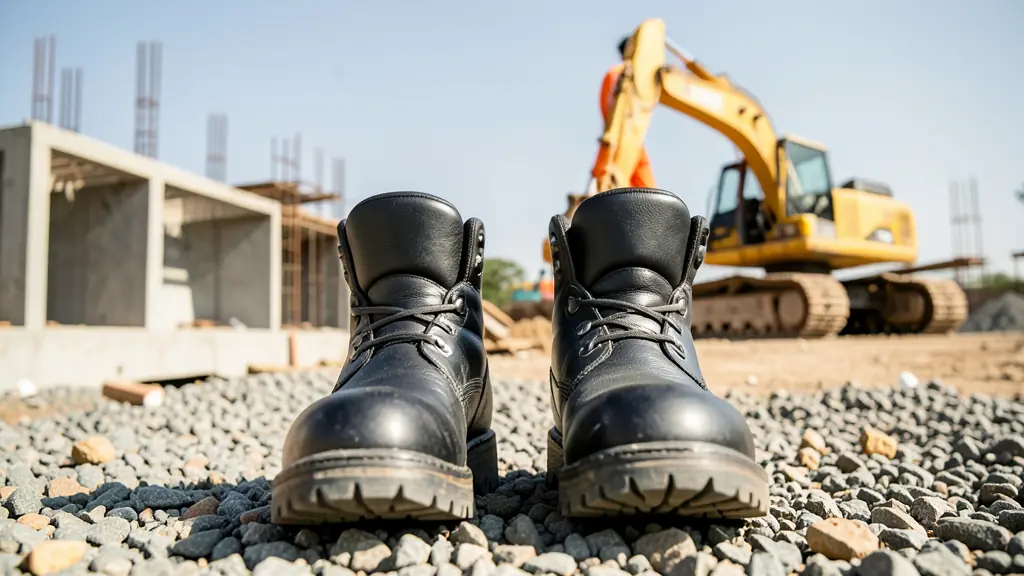
- SANS 20345 classes SB, S1, S2, S3
- Steel, composite or aluminium toe caps
- Metatarsal guards on request
- Dual-density PU or nitrile soles
- Sizes 3 to 13, half sizes
Good safety boots protect your toes, soles and ankles, and they stay comfortable through a long shift. PPESuppliers.co.za is a free quote-request service for South Africa. Tell us what boots you need, how many pairs and where they must be delivered. We pass your request to independent PPE suppliers, manufacturers and workwear stores, who quote you directly. We do not sell boots ourselves. There is no charge and no obligation to accept a quote, so you can compare several offers before you order.
What makes a boot a safety boot
A safety boot has a reinforced toe cap and a sole built to resist penetration and slipping. In South Africa, safety footwear is tested to SANS 20345, which follows the international EN ISO 20345 standard.
- SB: basic toe protection only.
- S1: adds an anti-static, energy-absorbing heel.
- S2: adds water resistance in the upper.
- S3: adds a penetration-resistant midsole and a cleated outsole, the usual choice for mines and building sites.
Toe caps, uppers and soles
Toe caps are made of steel, composite or aluminium. Steel is strong and thin. Composite is lighter, does not conduct heat or cold and suits electrical and airport work. Check the cap rating against the hazard.
Uppers are usually full-grain leather, but suede, rubber and PVC are also common. Chemical, wet and hot work each call for a different upper. Outsoles come in dual-density PU, nitrile rubber for heat and oil, and PVC. Add a metatarsal guard if heavy items could fall on the top of the foot. Lace-up boots give the best ankle support, while pull-on styles are quick to put on at a shift change. Women's lasts and half sizes help a proper fit.
Compliance and the employer's duty
Under the Occupational Health and Safety Act (Act 85 of 1993) and the General Safety Regulations, an employer must provide the required PPE free of charge and make sure it is used. On mines, the Mine Health and Safety Act applies in the same way.
Safety footwear sold in South Africa falls under compulsory NRCS specifications, so ask suppliers to confirm that the boots carry the correct approval and test reports. Look for a clear marking inside the boot showing the standard, the class and the size. Boots that look right but are not certified will not protect your people, and may not satisfy an inspector after an incident.
What affects the quote
We do not quote prices here, because each order differs. Cost depends on the standard and class, toe cap type, upper and sole material, special features such as metatarsal guards or insulation, the size range and the quantity. Say whether you want a fixed range for all staff or a mix, and whether boots must be branded or a house colour. Give the delivery address and the date you need stock. For large orders, suppliers can often run a sizing session on site and keep spare sizes for new starters. Ask about warranty and how they handle exchanges.
Comparing safety boots quotes
PPE prices move with fabric, leather and rubber costs, the exchange rate and stock levels. When quotes arrive, check:
- Exact item and standard: the product, the standard or rating it is certified to, and an NRCS letter of authority where one is required.
- Sizes and quantities: price per unit or per pack, size runs available and any minimum order.
- Stock or lead time: ex stock, or imported or made to order, and how long that takes.
- Delivery and VAT: delivery to site, branding costs, whether VAT is included and how long the price holds.
What to include in your request
- State the class you need, for example S3, and the toe cap type.
- List the sizes and quantities, with men's and women's fits separate.
- Describe the work: wet, hot, chemical, electrical or rough ground.
- Say if you need metatarsal guards, insulation or a lace-up style.
- Give the delivery address and the date you need the boots.
Frequently asked questions
Do you sell safety boots?
What does S3 mean on safety boots?
Steel toe or composite toe: which should I choose?
Can I order safety boots for women?
Safety Boots by province
- Safety Boots Gauteng
- Safety Boots Mpumalanga
- Safety Boots North West
- Safety Boots Limpopo
- Safety Boots Northern Cape
- Safety Boots Free State
- Safety Boots KwaZulu-Natal
- Safety Boots Eastern Cape
- Safety Boots Western Cape
Safety Boots by city and town
- Safety Boots in Johannesburg
- Safety Boots in Pretoria
- Safety Boots in Centurion
- Safety Boots in Midrand
- Safety Boots in Sandton
- Safety Boots in Randburg
- Safety Boots in Roodepoort
- Safety Boots in Krugersdorp
- Safety Boots in Randfontein
- Safety Boots in Germiston
- Safety Boots in Boksburg
- Safety Boots in Benoni
- Safety Boots in Kempton Park
- Safety Boots in Alberton
- Safety Boots in Vanderbijlpark
- Safety Boots in Vereeniging
- Safety Boots in eMalahleni (Witbank)
- Safety Boots in Middelburg
- Safety Boots in Secunda
- Safety Boots in Mbombela (Nelspruit)
- Safety Boots in Rustenburg
- Safety Boots in Brits
- Safety Boots in Klerksdorp
- Safety Boots in Potchefstroom
- Safety Boots in Polokwane
- Safety Boots in Tzaneen
- Safety Boots in Lephalale
- Safety Boots in Kimberley
- Safety Boots in Kathu
- Safety Boots in Upington
- Safety Boots in Bloemfontein
- Safety Boots in Welkom
- Safety Boots in Sasolburg
- Safety Boots in Durban
- Safety Boots in Pinetown
- Safety Boots in Pietermaritzburg
- Safety Boots in Richards Bay
- Safety Boots in Newcastle
- Safety Boots in Ladysmith
- Safety Boots in Gqeberha (Port Elizabeth)
- Safety Boots in East London
- Safety Boots in Kariega (Uitenhage)
- Safety Boots in Cape Town
- Safety Boots in Bellville
- Safety Boots in Paarl
- Safety Boots in Stellenbosch
- Safety Boots in George
- Safety Boots in Worcester